Smoothie Satisfaction

DSC_4134

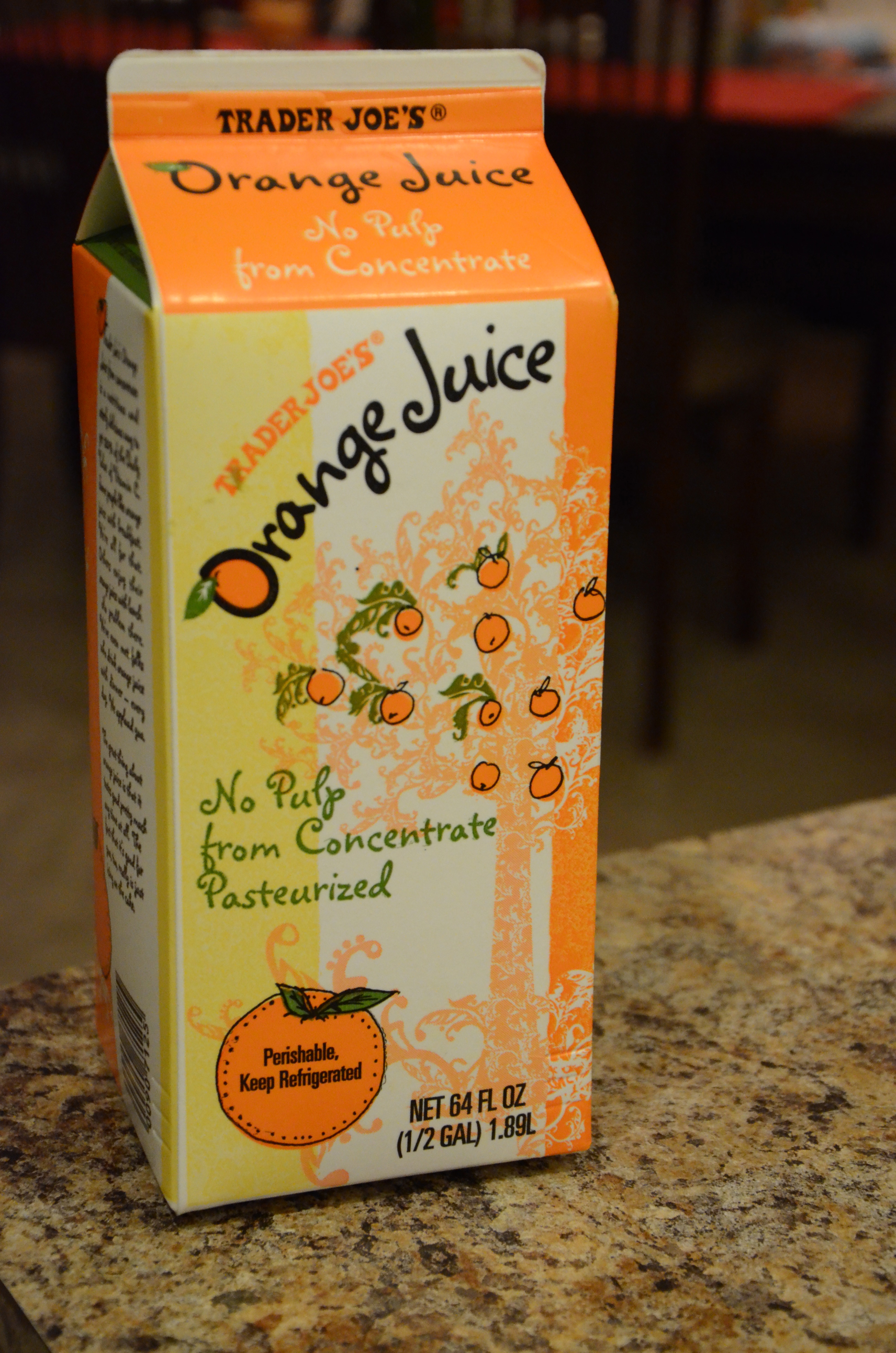
A few weeks ago, my husband and I had several house guests. I seem to recall a time in the past when these guests asked about orange juice in the mornings, and I didn’t have it, so halfway through the weekend I came home with a half gallon from Trader Joe’s. Alas, when the guests departed, hardly a glass had been consumed, and I faced an abundance of juice that I rarely drink and Matt never does.

Over the course of a couple of weeks, I used the orange juice to make Orange MuffinsCinnamon-Orange Juice Cake (a delicious coffee accompaniment that resembled a doughnut in cake form) a marinade/sauce for pork chops, and the recipe I am featuring today, for an Avocado Banana Smoothie. All of these recipes would certainly have tasted better with freshly squeezed orange juice and orange zest incorporated, but I was content to “cook” almost exclusively from what I had on hand.

I just realized that my mantra should probably be: “when in doubt, bake it into a cake or blend it into a smoothie,” because I have previously used excess produce to make things like beet cake and avocado pound cake.

I actually selected this recipe because I had a very ripe avocado I needed to use, which I had bought because it was on sale and for no other reason–not a good idea, but I seriously have work to do in terms of controlling myself at grocery stores. It was a coincidence that I also bought a brand new blender this week and wanted to it work its magic. Never mind that I later verified the sharpness of the blending blade by slicing the top of my finger while trying to put the pieces away. (Boy is it sharp!)

Back to the food. This recipe was adapted from a recipe from Martha Stewart’s Everyday Food and influenced by Marcus Samuelsson’s recipe for an Avocado Banana smoothie.

Avocado Banana Smoothie
Serving Size: One jumbo-sized smoothie or two regular glasses

1/2 avocado
1/2 banana (can be one that has been kept in the freezer, waiting to find a home in a smoothie)
1/4 cup non-fat plain Greek yogurt
3/4 cup of orange juice (preferably freshly squeezed)
juice from 1/2 lime, or to taste (I had about 2 tablespoons)
1 teaspoon freshly grated ginger, or to taste (I keep ginger in the freezer for as long as a month to take out and grate from as needed, and it is very easy and neater to grate ginger from frozen)
2 teaspoons of honey, or to taste
1 1/2 cups of ice

Drop solid ingredients into a blender and then pour liquids on top. Blend until smooth. Serve immediately. In honor of St. Patrick’s Day, enjoy this liquid green goodness!

Herbilicious

Last week, I took on the challenge of poaching eggs thanks to inspiration from a Tasting Table recipe found here. My previous attempts have not been impressive–I tend to lose a lot of the egg white. However, I liked the sound of this recipe and had most ingredients on hand. (To be fair, I substituted quinoa for bulgur and panko for breadcrumbs. I also left out curry leaves and ended up leaving my chile behind at the checkout of the grocery store. It was so tiny I didn’t even see it roll down the belt! I substituted a little green chile hot sauce I had in my pantry as a souvenir gift from Mexico from my sister-in-law. It still turned out great.) As for the poaching, well, check out the photo on the recipe page — my egg actually looked a lot like that!)
The item I did buy was parsley, for the parsley stems that flavored the poaching water.
Using up fresh herbs is tough. I ended up having both cilantro and parsley on hand, which fortunately triggered the memory of a chimichurri sauce and one of my favorite and easiest Cooking Light recipes.
20130308_203812

Argentine Black Bean Pizza with Chimichurri Drizzle

Adapted from Cooking Light and myrecipes.com

1 of your favorite store-bought pizza doughs, or dough from your favorite pizza dough recipe

1 red bell pepper, or previously roasted red peppers in jar if you have

Black Bean Spread (recipe uses only a portion of this):
1/2 cup coarsely chopped onion
1 (15-ounce) can 50%-less-sodium black beans, rinsed and drained
1 (14.5-ounce) can organic fire-roasted diced tomatoes with green
chiles, undrained (such as Muir Glen), or whatever chunky tomato product you have on hand plus something to add heat.  During the summer, I grew a jalapeño plant next to my tomatoes, so I did once attempt to duplicate this with fresh ingredients. The depth added with the fire-roasted version is nice though.

Preheat the oven to 450°, preferably with pizza stone inside.

If you are roasting a fresh pepper, cut in half lengthwise; discard seeds and membranes. Place pepper halves, skin sides up, on a foil-lined baking sheet; flatten with hand. Turn oven to broil and set timer for 10 minutes. Watch pepper closely until blackened (I say “watch closely” because in my house, broiling=smoke detecter goes off, even if I swear there’s no smoke or fire!). Place in a zip-top plastic bag; seal. Let stand 10 minutes. Peel and cut into 16 strips. Set aside.

Combine ingredients for Black Bean Spread in blender or food processor and process until smooth.

Roll dough into the size and shape of your pizza stone or baking dish and to desired thinness. Place dough in 450° oven to pre-bake for approximately 7 minutes.  Remove from oven. Spread Black Bean Spread thickly over dough. Sprinkle with:

1-2 ounces finely grated fresh Parmesan cheese, enough to cover Black Bean Spread in a thin layer.

Return to oven and bake for 10 minutes or until cheese is bubbly.

20130308_203536

Chimichurri:
1/4 cup chopped fresh parsley
1/4 cup chopped fresh cilantro
2 tablespoons olive oil
1 tablespoon fresh lemon juice (I’m going to go out on a limb here and say you could substitute lime juice!)
2 teaspoons minced garlic

Combine chimichurri ingredients in a small bowl.  When pizza is done and cooled slightly, drizzle mixture over.  Cut into pieces and garnish each slice with strips of red bell pepper.

20130308_203646
Then, with remaining herb leftovers, I took advice I found online for freezing cubes in olive oil.  I also read some people using chicken broth or water.  The oil combination makes sense to me though, since I have already been freezing batches of fresh basil pesto for years. This was just whole leaves. What also makes this great is that olive oil and herbs are the start for another chimichurrri!

Any ideas for the leftover Black Bean Spread, besides eating it with tortilla chips?

Top Chefs

I would be remiss if I did not acknowledge the fact that my blog title can become oxymoronic in certain contexts. For example, it takes much less time throw away meat scraps and partial vegetable packages and leftover rice than to preserve them safely before putting them to good use. Home cooks might find the day flying by, but in general, we can afford to spend a few minutes finding a plastic bag or sealed container and adding a label. In restaurants, however, minimizing waste is a low priority.

Two weeks ago, I participated in a faculty and staff cooking competition at my place of work, organized by the food services division and held for an audience at the on-campus conference center. We had applied in teams of three, and upon arrival each team was given a different basket of several items with which we were to make an appetizer and an entree. There was also an extensive pantry of fruits and vegetables as well as spices and oils. The clock was set for 90 minutes. At the 45 minute mark, we had to present our appetizer, and at the end, our entree, to three judges.

Our basket contained: pork tenderloin, bacon, shrimp, fennel, brussel sprouts, spaghetti squash, and purple potatoes. Our setup was a table with two nice gas burners, two frying pans, a cutting board, some utensils, a couple of sheet pans and mixing bowls, and two tubs underneath the table, for trash. The ovens were nearby at a different table, and there were grills and a sink outside for washing pans and dishes. Conference center staff was walking around to provide us assistance with equipment, and to make sure no one got hurt.

A portion of the “pantry” of additional ingredients.

The 90 minute challenge might be fairly easy for experienced cooks or chefs. But when the clock started, I was stressed. Eventually we figured out what to do, starting with an apple-fennel slaw and marinated shrimp in an endive spear. Then I took on the pork, which I wanted to rub with spices and roast in the oven to keep it tender. The package had two pieces, and I knew the judges’ plates only needed one slice each, seeing how with appetizers and entrees from four teams, they might only be taking one or two bites anyway. What was I to do with the other loin? I felt a serious twinge of discomfort putting the perfectly good piece of meat in the garbage bin. I had no real time to ask questions, because part of our score was station cleanliness. So perfectly good shrimp, a quarter of a bacon package, and two-thirds of a piece of fennel were quickly dumped in the bins underneath the table, mixed with our used tasting spoons, dirty dishes, and other garbage.

Sharing a cutting board and contemplating brussel sprouts.

Sharing a cutting board and contemplating brussel sprouts.

It reminded me of the story I heard on NPR last November, which mentioned the waste reduction efforts of a company called Leanpath.  The idea is that food waste is harmful in several ways: it fills dumpsters, then fills landfills (food is the number 1 material there) where it generates millions of tons of methane, a greenhouse gas, and it wastes millions of dollars, both money and resources spent to grow the food, and money to buy it.  Your $100 grocery bill?  Go ahead and throw $3 in the trash.  These are alarming statistics, many of which are nicely laid out by Leanpath here.  Leanpath works to save restaurants money by having them monitor their food waste using a scale and tracking software–a definite investment in time. The company’s featured successes have been at colleges and medical centers, but in the NPR story, the Chef at Lupa Osteria Romano, a restaurant in Manhattan, decided to abandon the system to save time for the kitchen staff.

A grainy picture of me with my team's entree offering, which didn't look fantastic even in better lighting!

A grainy picture of me with my team’s entree offering, which didn’t look fantastic even in better lighting!

Like Leanpath, I am holding out hope that food waste tracking becomes a priority for restaurants. I won’t count on being given extra time at my next cooking challenge.  But perhaps customers will start to understand the extra minute or two they wait to receive their fresh pasta.

Bumper Crop – Part 2

One way I used up a ton of tomatoes (and a ton of time) was making ketchup. I used the recipe in my New York Times Cookbook — and found the result nearly inedible.  I don’t feel the need to track the recipe down now, but let me be clear about the problem: any time a ketchup recipe instructs you to add cloves, add no more than 1/4 what it says, and by no means add a full tablespoon!

I was in serious danger of committing serious waste.  How did I use it up?  Added lots of tomato paste, and used it in meatloaf.

DSC_2218 DSC_2222

There was a New York Times recipe that served me well: Tomato Eclairs.  This was probably one of the most unique ways I used tomatoes, and boy was it fun! They didn’t come out terribly beautiful, which may be why I can’t track down any photos. But what a great brunch item! I even had leftover ricotta that I made fresh earlier in the week.

One thing I want to note that may seem obvious is that these are really only good fresh.  Like many pastries, the eclair loses texture and flavor with the refrigeration required to keep these safely for any length of time. I planned poorly and was the only one there to eat the fresh eclairs. Next summer, I will make them again for witnesses!

Bumper Crop – Part 1

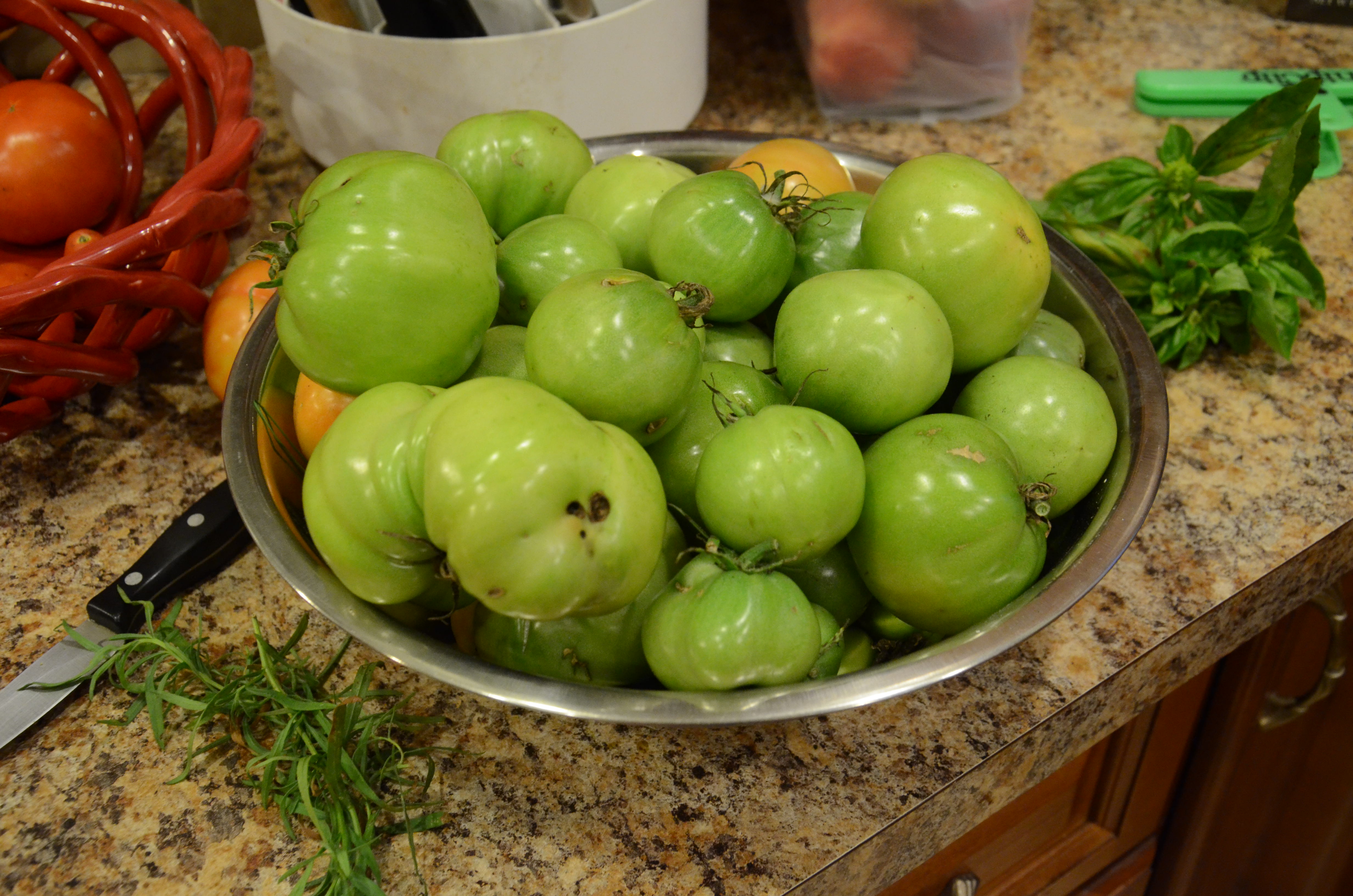
This post will focus on one particular ingredient: fresh tomatoes. Last spring I planted several tomato plants, both the plum variety and juicy round ones.  I don’t know if I have especially fertile soil in my yard, if these plants are a particularly hardy breed, or if I do have a special touch, but I had a stellar crop for the second year in a row.  My life became a mission to keep these from going to waste. For some weeks, I measured at least a pound of tomatoes becoming ripe on a daily basis. I was seeding, dicing, blanching, stewing, and freezing as fast as I could. Here  are some of the ways I put tomatoes to good use.

photoOven-dried “sun-dried” tomatoes. I referenced allrecipes but all that says is bake for 200 degrees until you think the texture is right.  Mine probably took 10-11 hours. I wasted too much time reading the debate over how to store these, ultimately deciding to freeze them in a baggie. They did just fine.

DSC_1991

Cucumber and Avocado Soup with Tomato and Basil Salad – I thank my farm share for this inspiration.  I generally avoid cold soups, but after this refreshing version perhaps I’ll give them more of a chance.  Basil is another plant that thrives in my garden in the summer.  And though I didn’t grow cucumber myself this year, my neighbor bestowed me with an enormous one from his garden. (This was after I had pushed some of my tomatoes on him previously.) Neighbors sharing what they have in abundance — I love it!

DSC_2012_2

No recipe needed!

Welcome to my world!

I have always been someone who abhors waste. I am pretty diligent about recycling, so much so that I collect the non-corrugated cardboard that is not accepted by my town’s recycling program and bring it to my parents’ house, 250 miles away. (Lately, my husband has been slipping it in with the mixed paper and hoping for the best.) I hate it when things break and can’t be fixed. I am very reluctant to throw them away, thinking that they might magically come back to life. Home ownership brought with it anxiety about appropriate sprinkler use and lawn waste disposal along with the ability to compost on a large scale.

In my work experiences, I consistently demonstrate a dislike of wastefulness and inefficiency. I advocate clear and consistent communication, push for proactive planning rather than reactive processes, and maintain nose-to-the-grindstone focus when I have lots to get done–forget the idle chit-chat that cuts into my free time!

The one thing I consistently find myself “wasting” time on is cooking. I constantly read recipes in magazines, newsletters, and blogs. Then I spend trip upon trip grocery shopping, fighting the urge to impulse buy. Finally, I end up spending hours on recipes I am told should take minutes. Sometimes I knowingly take on a marathon recipe. (In fact, I seem to pick recipes that are very involved more often than not.)

Everyone struggles to a certain degree to keep up to date with the freshness of items in their refrigerator, and I am no different. While I am known for some excellent cooking, I am still learning the the basics of being a home cook. Which means that I don’t have a clear repertoire of interchangeable meals, and I having yet acquired the ability to look at a bunch of leftover ingredients and come up with a new meal. It pains me to let them go bad, and throw them out. I need to do better.

I have decided to make it my goal to throw away as little unused ingredients as possible. This blog will track my triumphs and struggles. Wish me luck!