Weekend Cooking – Part 1 – Chard

I hadn’t done much cooking during the week, with dinners out and social gatherings, so I had big plans to use up a lot of ingredients on Friday night. It was to be a “cook the pantry” type of night. Then it got to be 8:30pm before I started. Why so late? Well, there was some drama in discovering that one of our cats was refusing to eat the dry food we had always fed her, so there were two trips to Petco to find alternatives. Then I was so sleepy that I tried to take a preliminary power nap. And one of the floors desperately needed to be vacuumed, and that needed to be done before too late so as not to disturb the neighbors. So, I didn’t have time to cook everything I wanted before bed. Fortunately, there was time on Saturday too!

I was facing another batch of swiss chard, so I decided to try something a little different. Why not puree it? This soup recipe was great because it also utilized parsley, which I received in the farm share at the same time it happens to be thriving in my garden. With the added tang and creaminess of lemon juice and greek yogurt and the salty zing of feta, we had a pleasant summery soup on our hands.
DSC_4840
DSC_4837

Chard, Herb, and Feta Soup
adapted from Bon Apetit
Serves 4

I’m not sure why the Bon Appetit recipe refers to this as a winter soup. Unless you have your own green house, the fresh herbs would be a big investment at the grocery store during the winter. I’m certain you could substitute spinach in this recipe, but there is no substitute for the fresh herbs.

2 Tablespoons olive oil
1 large onion
, coarsely chopped (I used about 1 C of onion I had left over)
2 large garlic cloves, smashed
1 pound Swiss chard leaves (center ribs and stems removed), coarsely chopped (about 10 cups)
3 1/2 cups vegetable broth
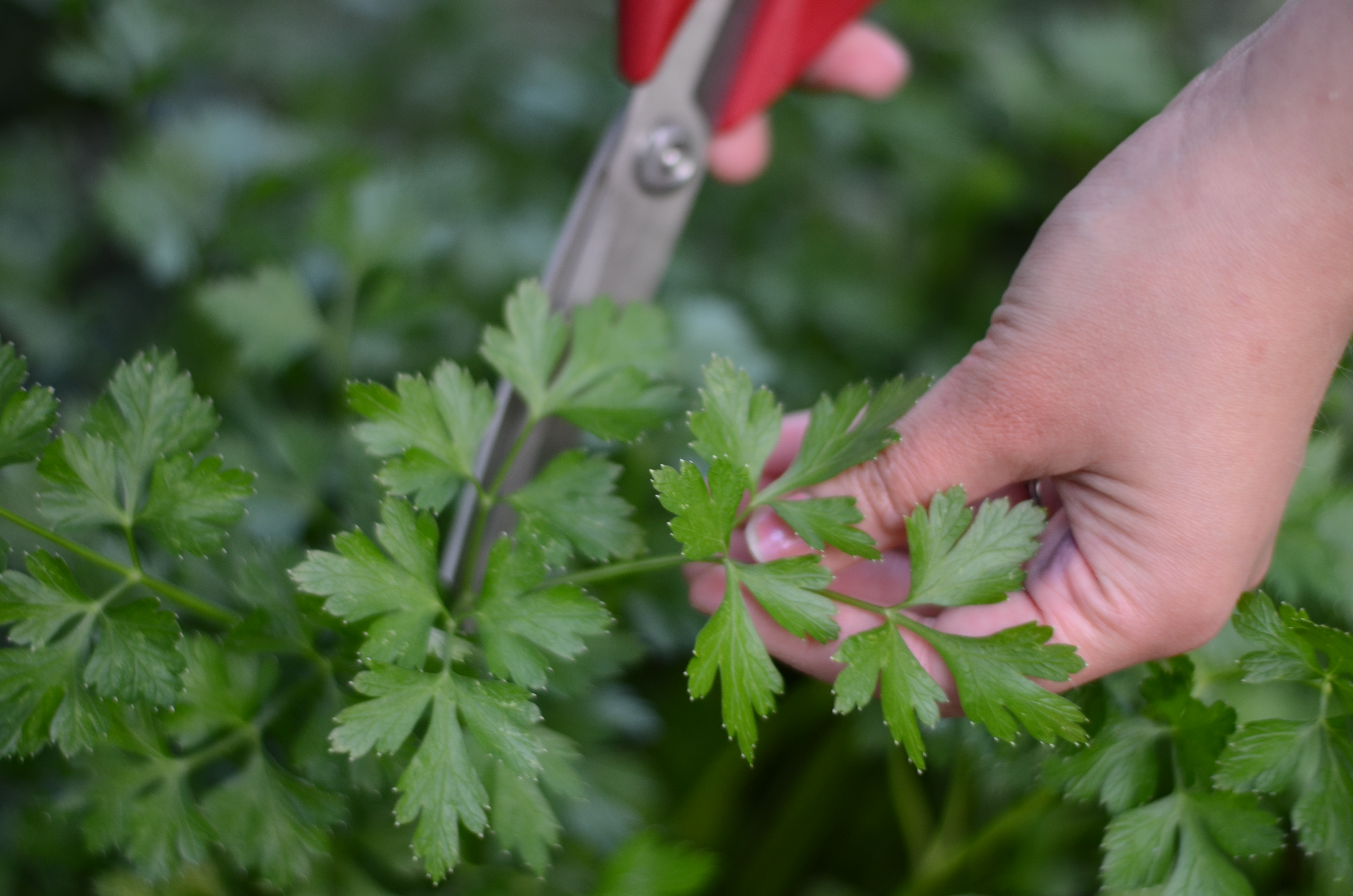
1 cup flat-leaf parsley
1/2 C fresh cilantro
1/4 C fresh mint leaves
1 tablespoon dried mint
1 teaspoon freshly grated nutmeg
1 tablespoon fresh lemon juice

Kosher salt and freshly ground black pepper, to taste
1/2 C plain Greek-style yogurt

Optional garnishes:
Plain Greek-style yogurt
Mixed chopped herbs
(such as parsley, cilantro, and mint)
Feta, crumbled
Kosher salt and freshly ground black pepper
Fresh lemon juice
Olive oil

DSC_4842
Heat oil in a large saucepan or dutch oven over medium heat. Add onion and garlic and cook, stirring often, until translucent and soft (do not brown), 7–8 minutes.

While they cook, roughly chop your herbs.
DSC_4850
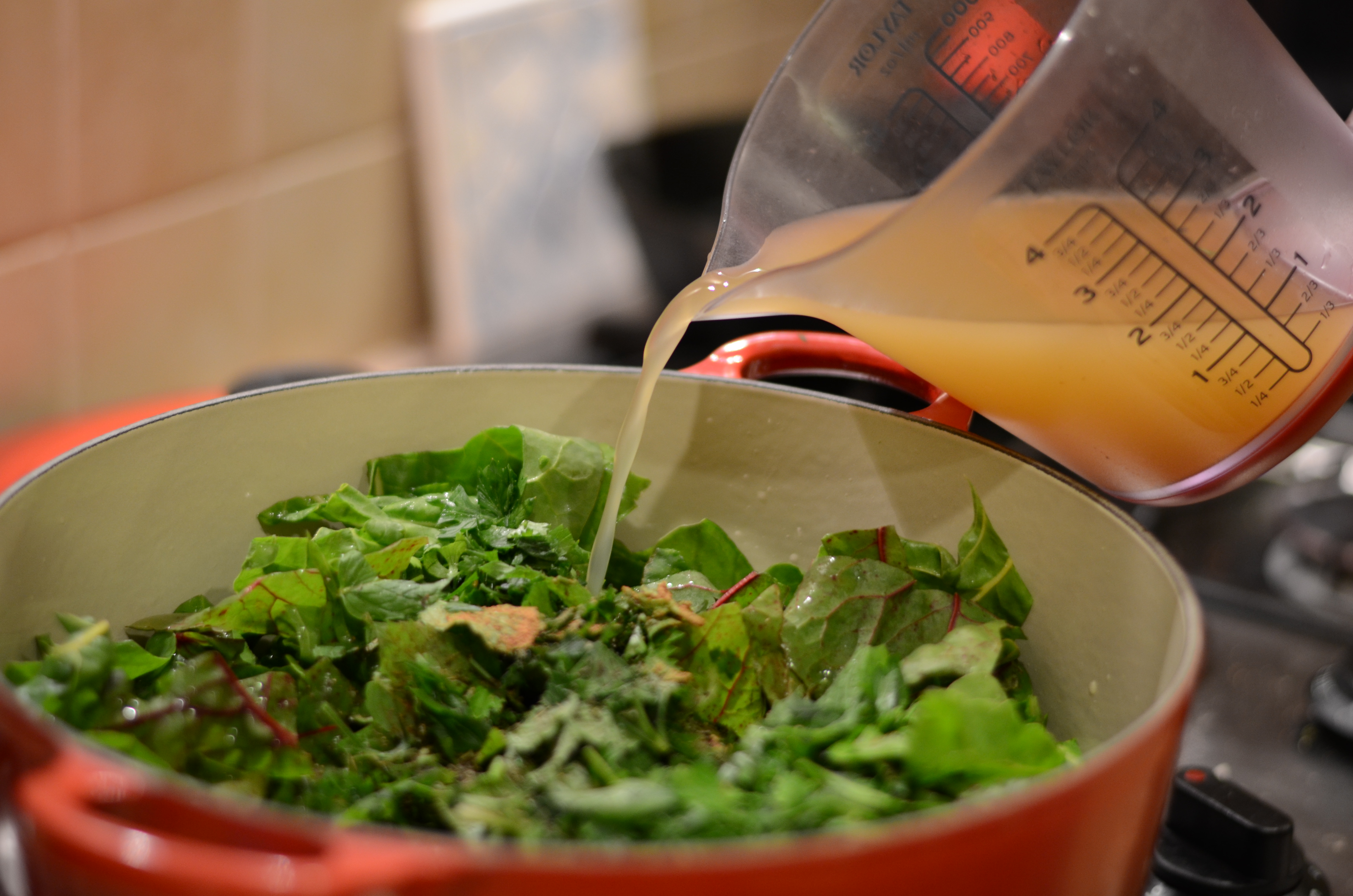
Add chard, parsley, cilantro, fresh and dried mint, nutmeg, and broth to the pan.

It might seem like there isn't enough broth...

It might seem like there isn’t enough broth…

Bring to a boil, reduce heat, and simmer, stirring occasionally, until chard is tender, less than 10 minutes.

.....and then the chard shrinks!

…..and then the chard shrinks!


Stir in lemon juice and season to taste with salt and pepper.

Take out your immersion blender tool and go at it. DSC_4866I like the idea of an immersion blender because it is very easy to clean compared to a food processor or blender. Yet it makes a mess with its splattering. Even with an apron, I don’t recommend wearing dry-clean only clothes with this one! Especially if you want your soup really really smooth, you could purée it in batches in a blender. Return to pan.

Place a few Tablespoons of the yogurt in a separate medium bowl. Add a ladle-full of warm soup and whisk until smooth. Repeat process twice more, using the yogurt and adding a total of 1 cup more soup.

Whisk yogurt mixture into soup in saucepan. Stir 1/4 cup herbs and about 1/4 cup of crumbled feta into soup. Season to taste with lemon juice, pepper, and salt, remembering that you will be garnishing with additional feta–and my feta at least was very salty.

Ladle soup into bowls and garnish with herbs and feta. Drizzle with oil, if desired. Serve with a good crusty bread, ideally.
DSC_4875

I had almost 3 Cups of leftover swiss chard stems, which I saved from disposal and pickled using this Bon Appetit recipe as guidance. I didn’t quite double the recipe–I ended up using about 3 Cups of Sugar, 1 3/4 Cups white vinegar, 4 Tablespoons Siracha, and 3/4 tsp of celery seed. Since they are supposed to sit for a few days, I have no idea how they will turn out, but I’ll let you know!
DSC_4883

Get Pot-lucky

Last weekend was a full weekend. On Saturday, we had a friend in town visiting so we went to a Yankees day game. On Sunday morning I was participating in the Color Run and then in the afternoon had a party to which I was expected to bring something. When we arrived home on Saturday evening, I still didn’t know what I was making.

A peek into my pantry revealed that I had some neglected sweet potatoes. I wondered about making potato salad with sweet potatoes, and with a little research I settled on this. From the time I started brainstorming to the time the salad was done was probably just 45 minutes. The parsley was in my garden and everything else was in my pantry or fridge. Score!

This salad has a lot going for it. There’s potential for substitutions, it develops flavors overnight, and it can safely sit out and be eaten at room (or outdoor) temperature. My vegetarian friends liked it, but I bet it would have been even tastier with bacon or prosciutto! (Check out this recipe for a fall or winter sweet potato dish, with prosciutto, that will knock your socks off).
DSC_4829
Summer Sweet Potato Salad
Adapted from a recipe by “NINABSLOAN” on SparkRecipes
Serves 6-8 if it is a main side dish, and many more at a potluck

1.5 pounds sweet potatoes or yams (about 2 potatoes that are on the large size)
1/2 C dried cranberries
1 shallot, thinly sliced
1/3 C pecans, chopped
2 Tablespoons fresh parsley, chopped

Dressing:
4 Tablespoons olive oil
2 Tablespoons rice vinegar
2 teaspoons Dijon mustard
salt and pepper
to taste

Set a pot of water to boil. Peel and cube sweet potatoes.
DSC_4818
DSC_4819
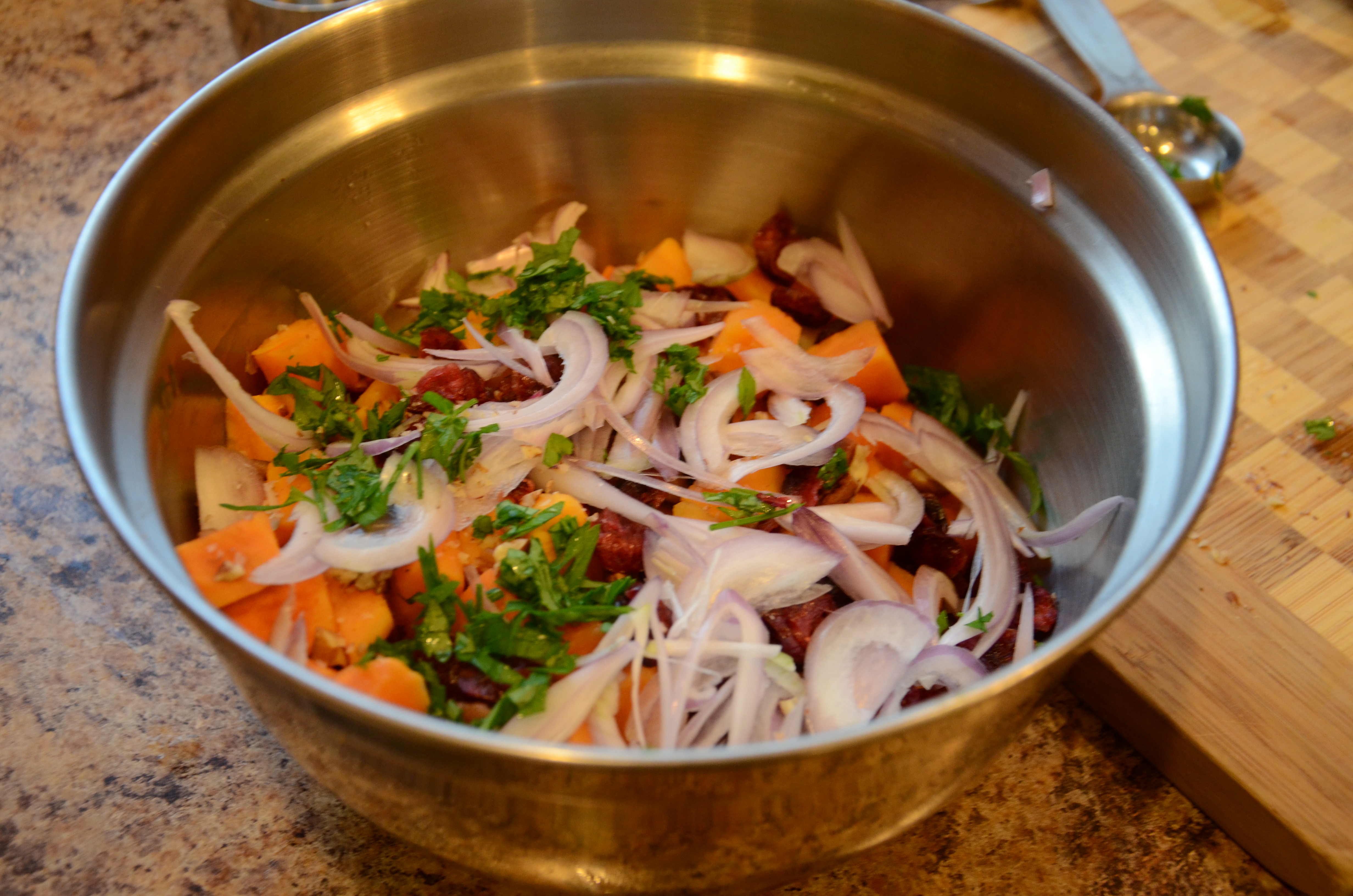
Add potatoes to water and boil until tender but still firm. Meanwhile, prepare remaining ingredients:
DSC_4820
Combine with drained sweet potatoes and then toss with dressing.
DSC_4824
DSC_4826
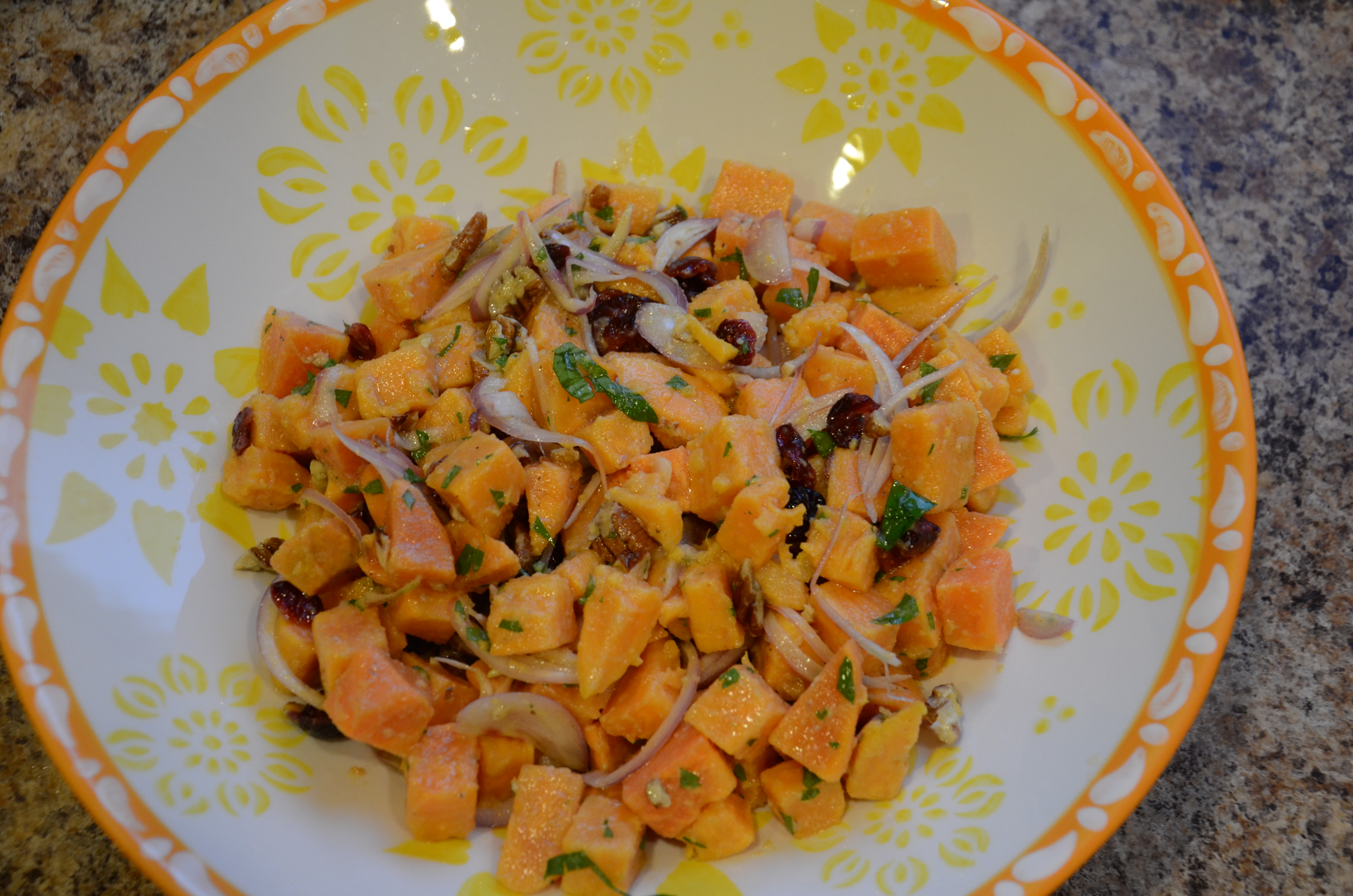
Chill and serve. Could it get much easier?

Even better in a festive bowl!

Even better in a festive bowl!

Candidates for Mayo

I have mentioned the fact that I worry about forgotten items accumulating in the refrigerator or pantry. I am revisiting that category of cooking this week. There was a reprieve from the pressure to use up fresh produce because my farm share drop-off day fell on July 4, and therefore was not distributed. And I actually managed to use up most of last week’s bounty within a few days!

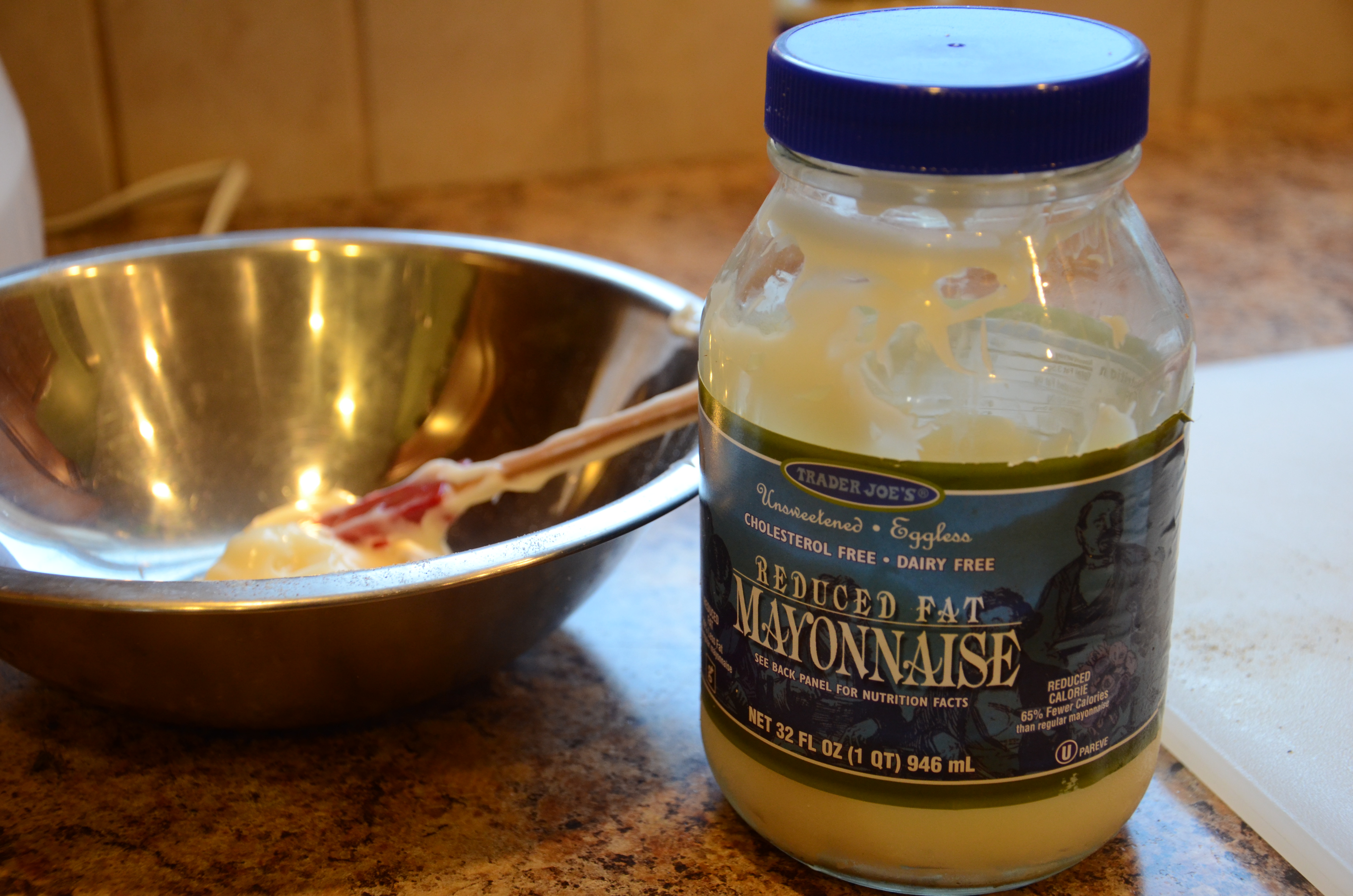
The particular item on my mind was a jar of mayonnaise. I have been known to have mayonnaise reach its expiration date before it is used up. Neither Matt nor I are big cold cut sandwich eaters, I don’t especially like coleslaw, and I prefer vinegar-based dressings for my pasta and potato salads. As for this current jar, I have a confession to make- somehow the expiration date became illegible, so I don’t know when I am supposed to retire it. I planned to “chance” it for a few more recipes, and then no more.
DSC_4792
I almost forgot to mention that around this same time I learned that mayonnaise turned 100 this year. Who knew?

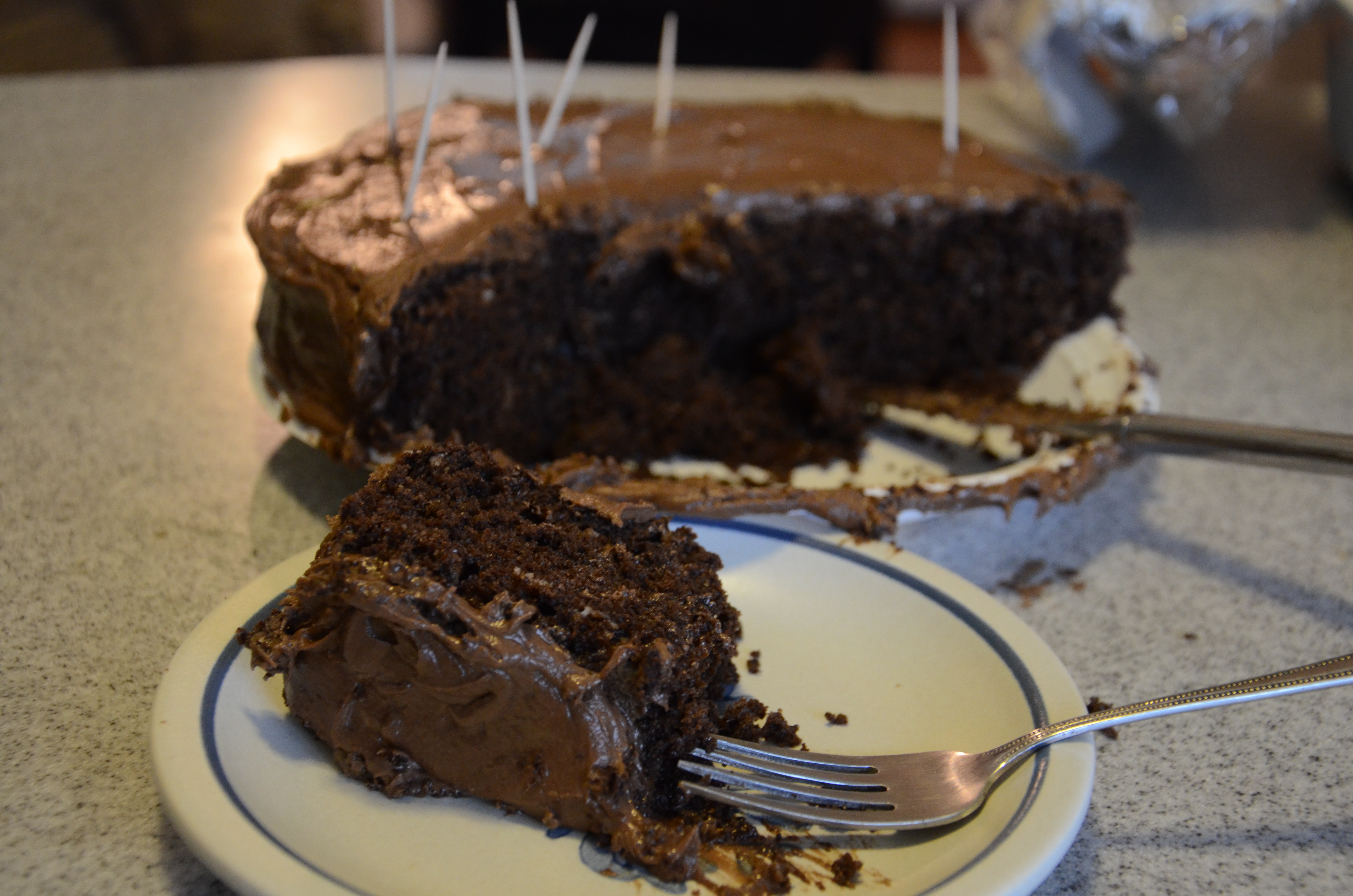
For the first application, I used the mayonnaise in a chocolate cake recipe I found on the website that seems to be a sister site in England. I made it MUCH harder for myself by going back and forth between internet searches to convert the grams to ounces when apparently I could have switched the units on my kitchen scale. Dang it. I was a little concerned about how the cake would turn out, particularly its texture, when I noticed that my mayonnaise was eggless. And clearly eggs are one of the common cake ingredients that the mayonnaise was supposed to fill in for!

Fortunately, it turned out fine. (And it didn’t make anyone sick. Woo hoo!). Even my pastry chef friend liked it. And the frosting, with the coffee flavor added (I used espresso powder), was killer.
DSC_4773

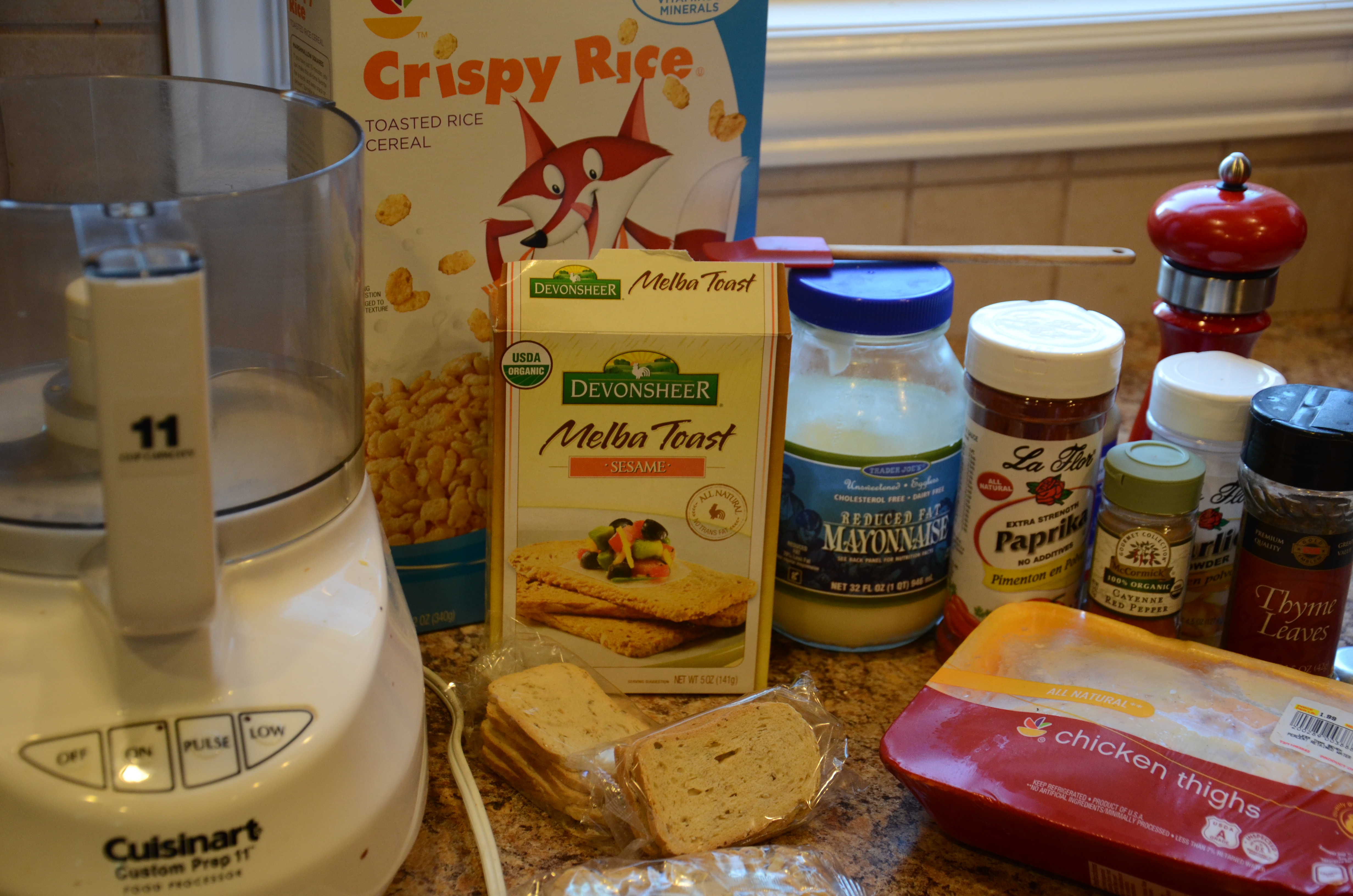
The next mayonnaise application would be oven fried chicken. Again, a random internet search taught me that mayonnaise could be an important player in making moist meat. What is great about this recipe is that you can make the coating out of pretty much anything you have hanging out in your pantry! I used melba toasts that somehow sat in my pantry for 9 months, and crispy rice cereal left over from marshmallow treats I had made to bring to a July 4th barbecue.

Oven Fried Chicken
adapted from Everyday Maven
Servings: It depends! This makes enough coating for at least 6 bone-in skinless chicken thighs, or at least 2 pounds of skinless chicken parts you are using. Most people would need two thicken thighs for a serving.

Approximately 2 pounds chicken pieces, skin removed (thighs, legs, breast, whole)
1 Cup Melba Toast, from 3 sub-packages
3/4 Cup crispy rice cereal
1/2 teaspoon garlic powder
1/4 tsp dried thyme
1/4 teaspoon cayenne pepper
1/2 teaspoon paprika
1 tsp kosher salt
1/2 teaspoon ground black pepper
1/2 Cup mayo
1 Tablespoon Dijon mustard
cooking spray or oil mister

DSC_4788
Preheat the oven to 350 degrees. (The original recipe said 400 degrees, and a very similar recipe said 350. I went with 350 because, honestly, I had time to kill. My thought was that the different temperature meant a different cook time but may not affect the chicken’s tenderness. It might be better to keep the temperature lower in case the breading gets too brown before the chicken reaches temperature.) Arrange a metal cooling rack over a jelly roll pan.

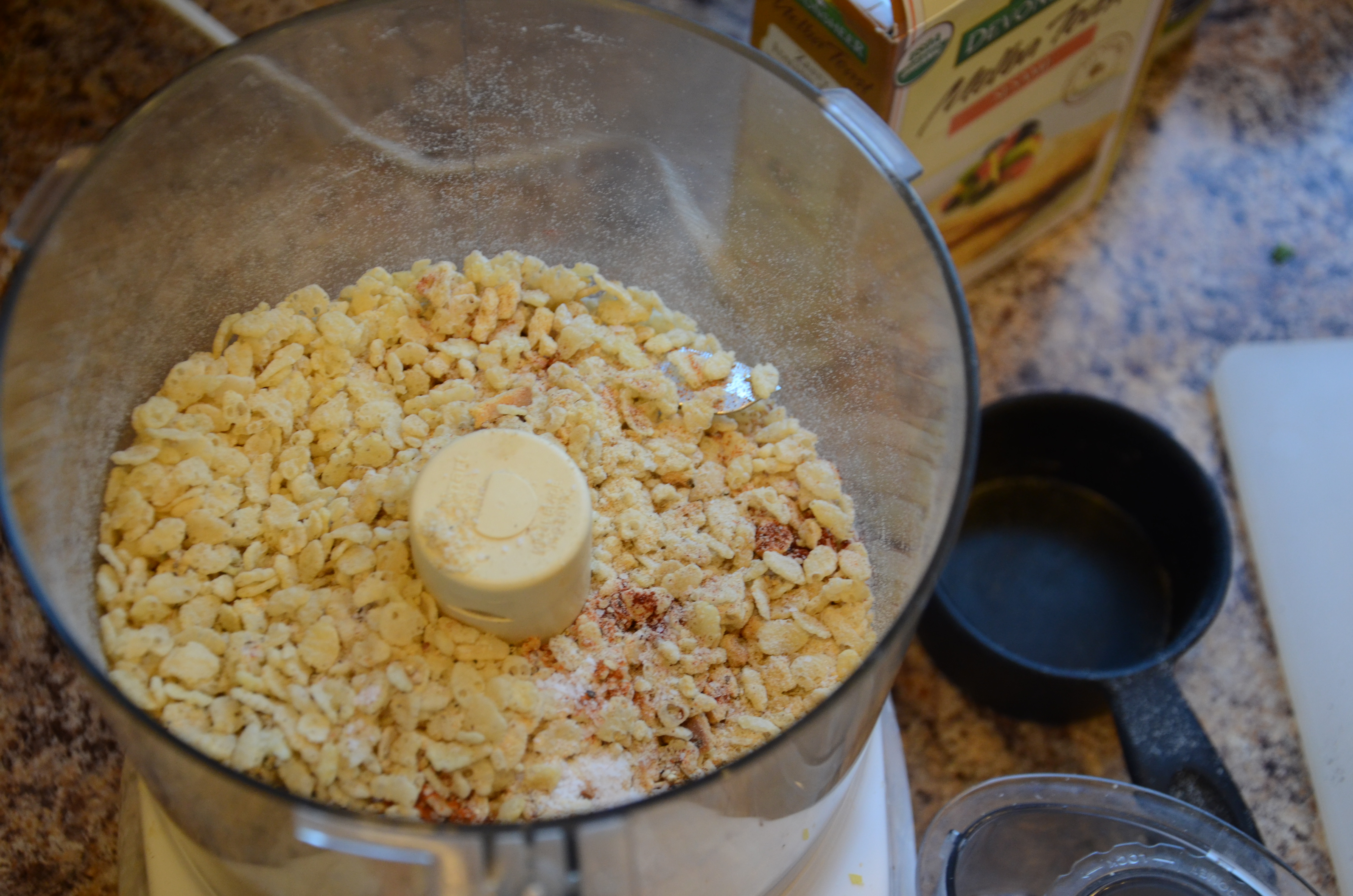
Crush the Melba toast in the packages, and then add to food processor to grind further. You want there to be some slightly larger pebbles after pulsing. Add any other, smaller crumbs, like crispy rice cereal, along with the rest of the spices. Pulse again.
DSC_4790

In a separate bowl, combine mayo and Dijon mustard.

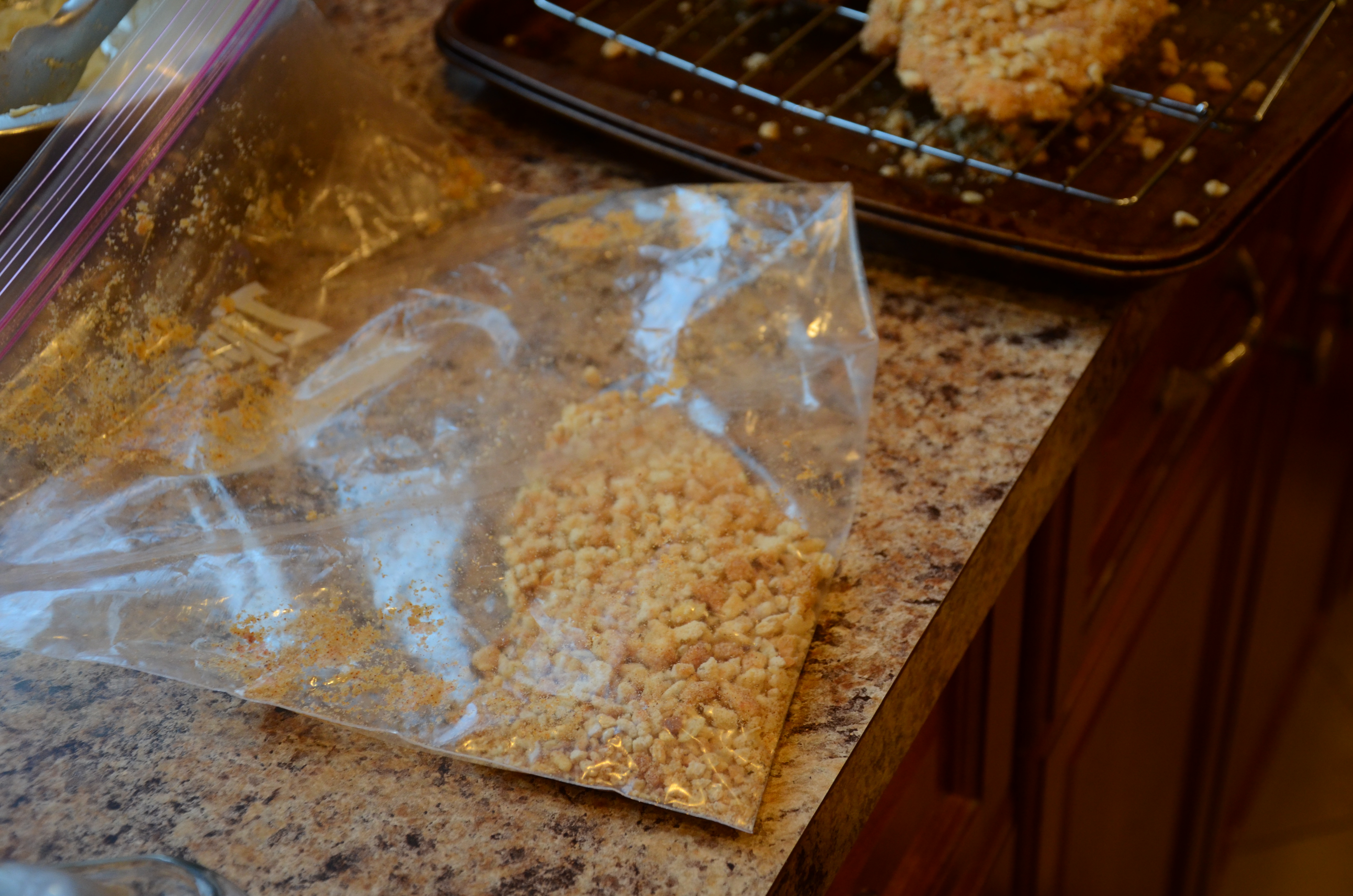
At this point, you have two options: 1) use two bowls and coat each chicken piece individually by going from the mayo mixture to the crumbs, or 2) Use a zip lock bag and the “shake and bake” method.
DSC_4800
Place on rack on pan and spray with cooking spray.

See how much leftover breading I had?

See how much leftover breading I had?


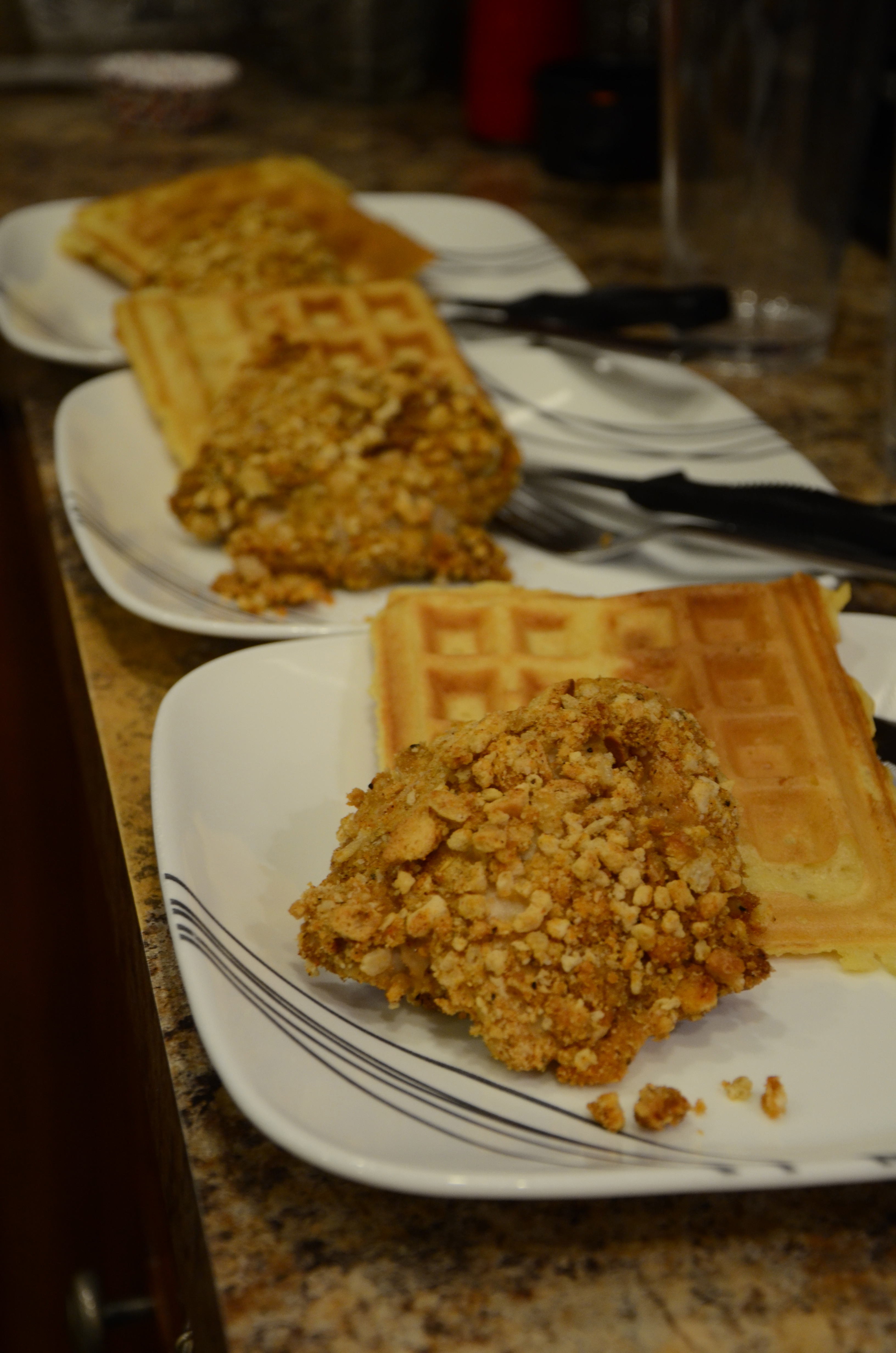
Cook until chicken is done (juices run clear and temperature reaches 165 degrees – 40 minutes for my thighs) rotating the pan about halfway through. Remove and allow to cool for a few minutes. The resulting chicken is amazingly juicy and delicious.
See how much leftover breading I had?
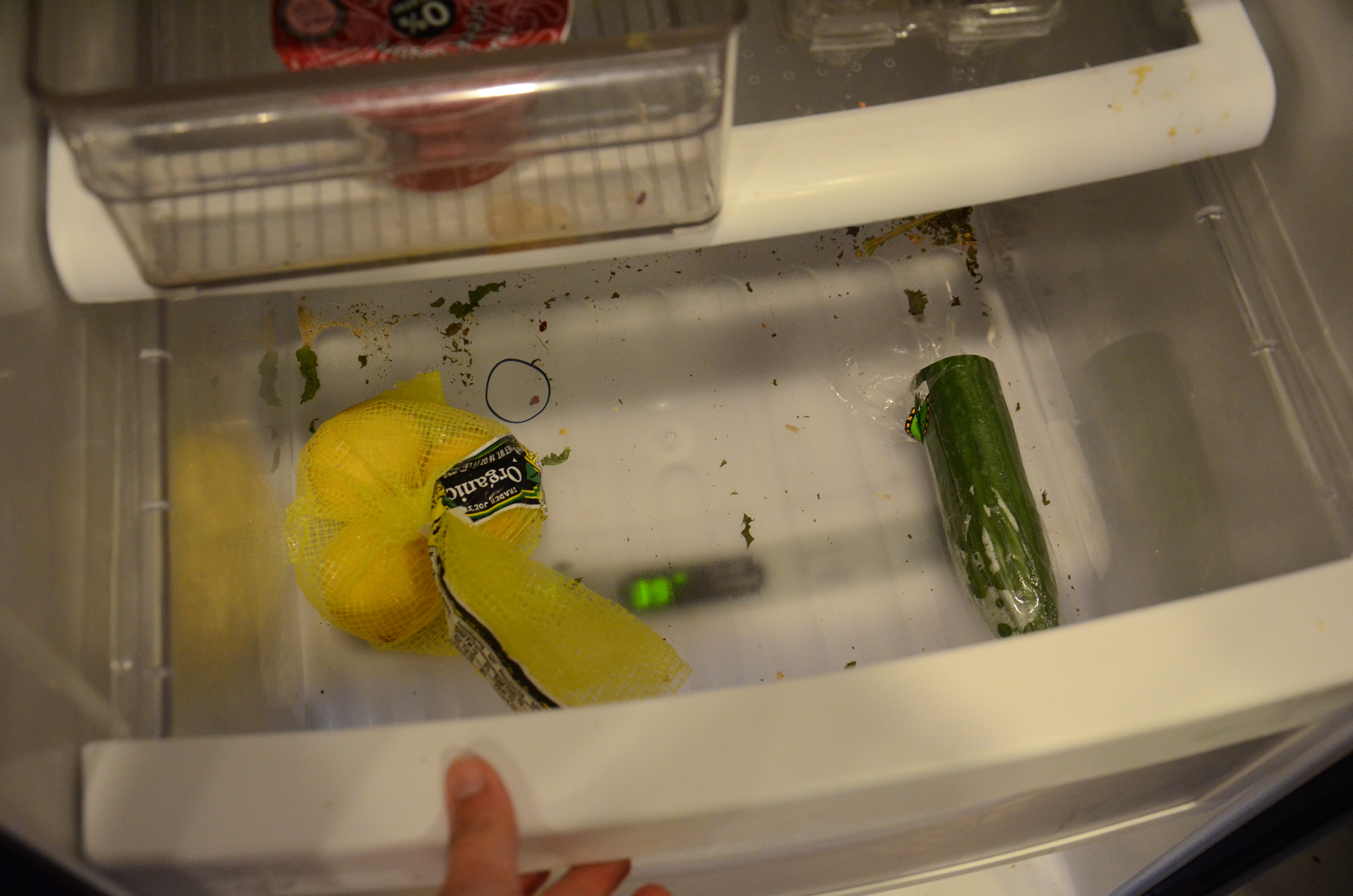
While prepping the chicken, I came to my senses about the fact that I couldn’t serve chicken alone for dinner. I should have planned to offer a vegetable, but I hadn’t thought about that. Canned beans didn’t appeal to me, and the only appropriate vegetable in my freezer was peas. Here is a rare glimpse at my nearly empty refrigerator crisper drawer!
DSC_4797

What could I serve with this fried chicken? Well, waffles of course!

I still had leftover waffle mix from a Christmas gift box. I added a couple of tablespoons of sugar to the recipe on the can, because sugar wasn’t on the ingredients list and I like a touch of sweetness in my waffles, even for dinner. Then I drew on the information gained from a friend—who became obsessed with replicating the flavor and texture of European-style waffles, Belgian waffles like they serve from the Wafels and Dinges truck in NYC, and learned that one of the secrets to crispy waffles is an abundance of butter—and doubled the recommended amount of butter. The waffles came out great.
DSC_4815
A little hot sauce, a little maple syrup, and we had a “complete” meal.
DSC_4813
DSC_4810

It’s Burger Season!

Who doesn’t love a burger?

I may be misleading you with the title of this post, because what I will be featuring is a veggie burger. But this veggie burger is one of the best I have ever tasted.

I found the burger on Pinterest, drawn to this picture:

.
The author described the original burger, which was discovered at a well-known vegetarian restaurant, as quite burger-like, vegetarian or not!

DSC_4746
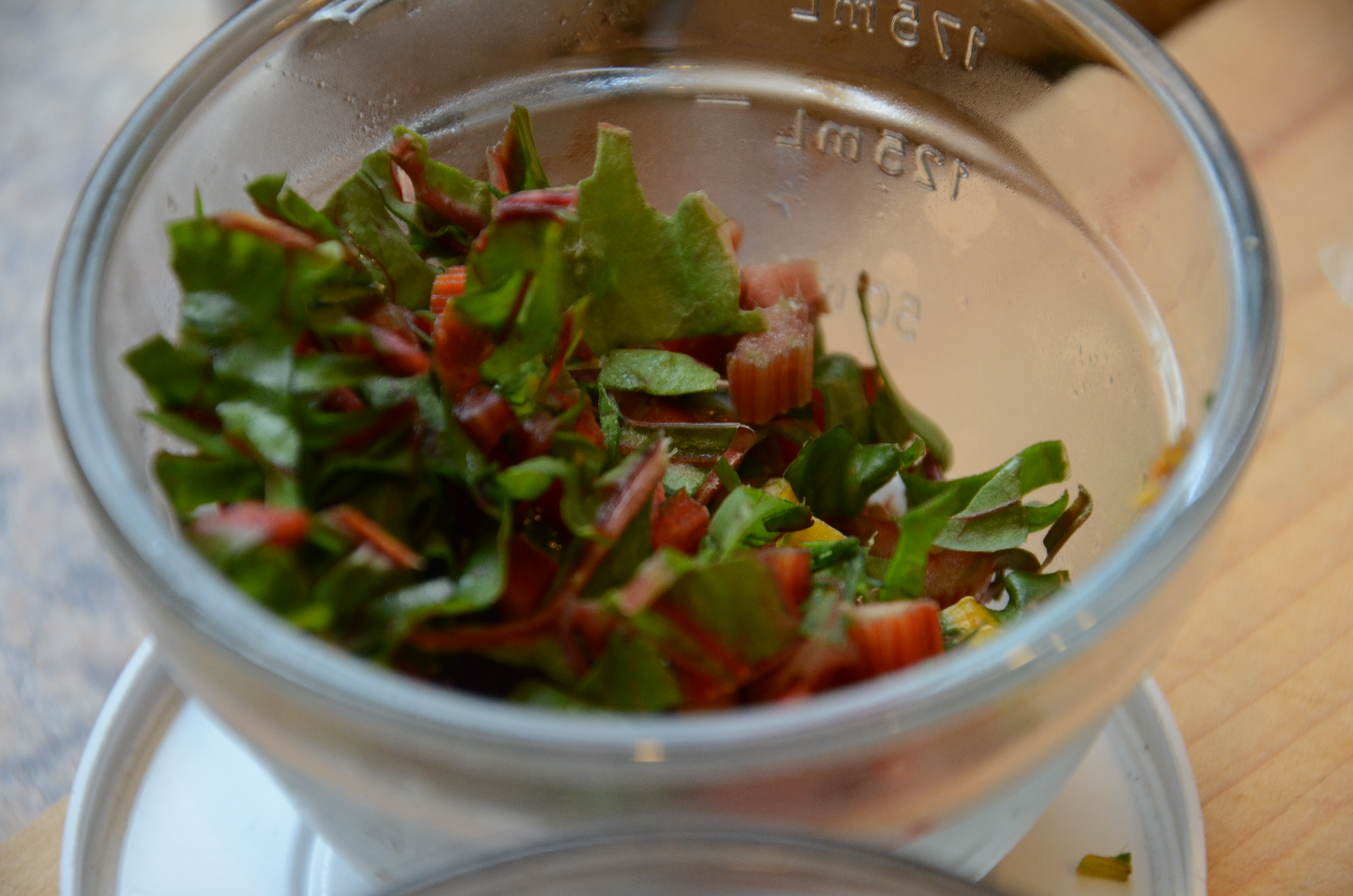
I’m particularly proud of how my version turned out because I truly improvised on this one. The recipe called for approximately one onion. We all know that onions vary widely in size, so that kind of recipe instruction bothers me. Sometimes it doesn’t matter, but a lot of times new or hesitant cooks would appreciate more precision. To represent that onion in this recipe, I used about 3/4 of a cup of “stuff”: a little bit of yellow onion, a little bit of leftover chopped red onion I had (from a recipe that actually stipulated the number of tablespoons), and—-chopped swiss chard stems! Swiss chard came in my share last week and I had yet to fully utilize it. I used a few leaves as a substitute for spinach in a blue cheese, sundried tomato, and greens sourdough bread I made in the bread maker the day before, and I saved the stems.
DSC_4751
If you’re not familiar with swiss chard, I would say that it has more of an earthy flavor than other greens. I’m sure it has some similarities with beet greens (which could also be used here, if you have beets with the full tops!).
DSC_4753

Beet and Bean Burgers
Adapted from theKitchn’s recipe inspired by the veggie burgers at Northstar Cafe in Columbus, Ohio
makes about 4 medium burgers

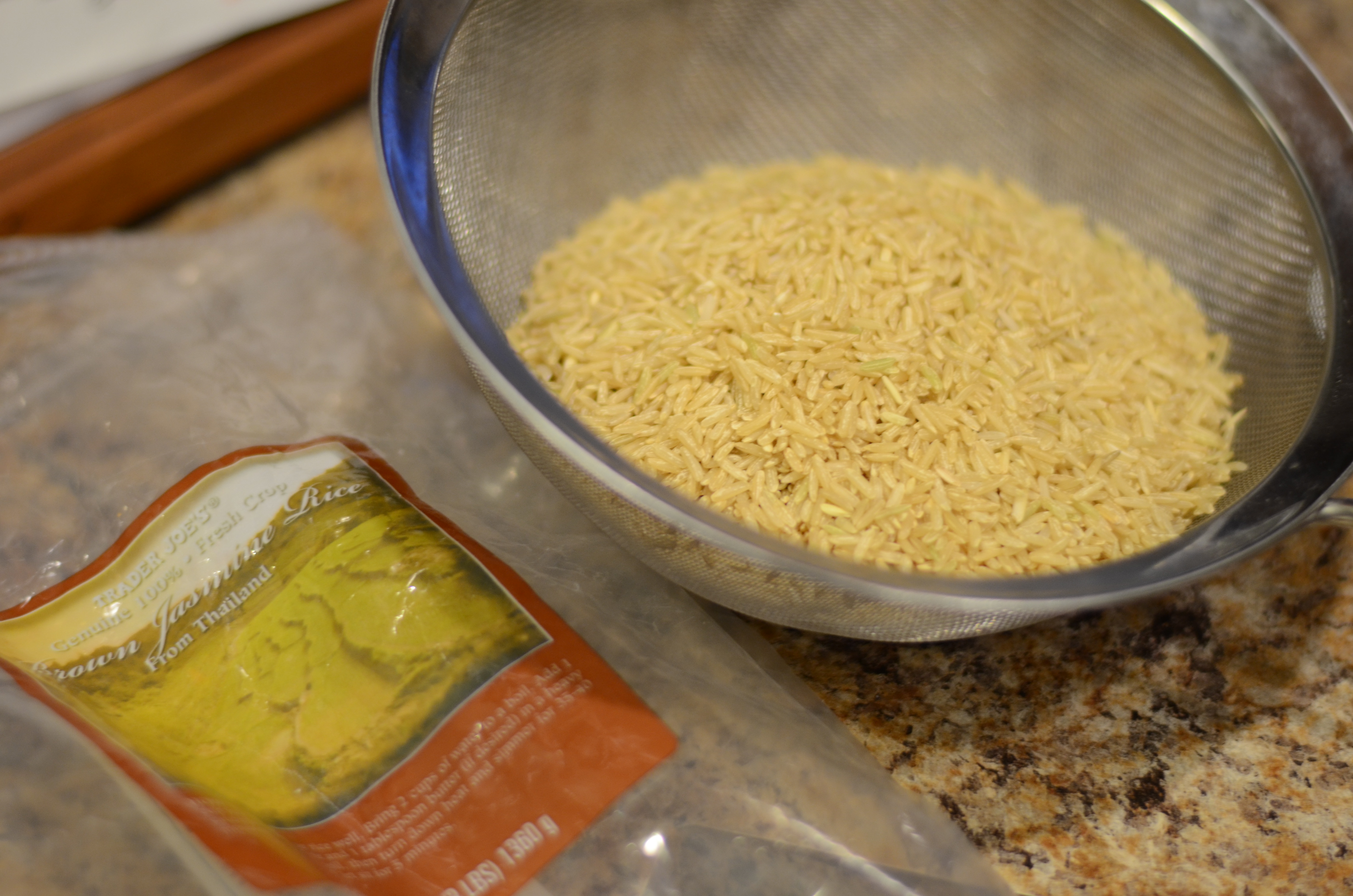
1/4 cup brown rice (doubled if you like more rice-they say it makes a crispier burger)
3/4 cup of some combination of onion (red, yellow, white, or even green) and swiss chard stem, diced small
About 8 ounces of beets, diced small
3 cloves garlic, minced (to taste…at least 2 tsp for me)
1 Tablespoons cider vinegar
1/2 can black beans (about 3/4 cup), drained and rinsed
1/2 juice from 1/2 lemon
2 teaspoons extra-virgin olive oil
1 Tablespoon parsley, minced
1/2 teaspoon coriander
1/4 teaspoon fresh thyme
, minced
2+ Tablespoons all-purpose flour
salt and pepper to taste

cheese (optional) – provolone, monterey jack, or cheddar

Fill a pot with water and bring to a boil. Add a handful of salt and the rice, and reduce the heat to a simmer. Cook the rice until it is no longer al dente. You want it a little over-cooked. This will take at least 40 minutes, depending on your rice. Drain the rice and set it aside.

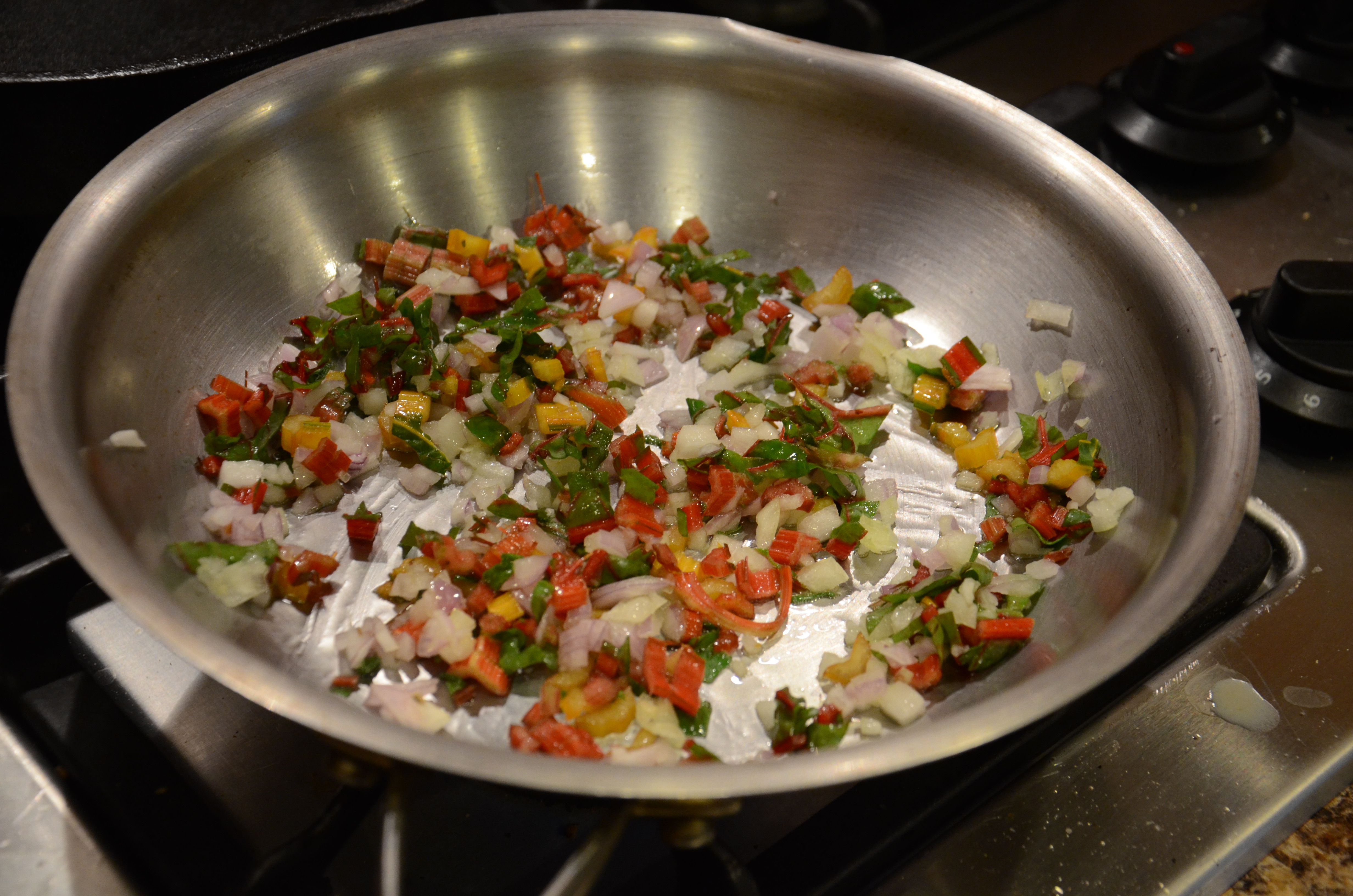
Heat a teaspoon of olive oil in a skillet over medium-high heat. Add the onion and swiss chard mixture, reduce the heat to medium, and cook until the onions are translucent and softened.

DSC_4754

So pretty!

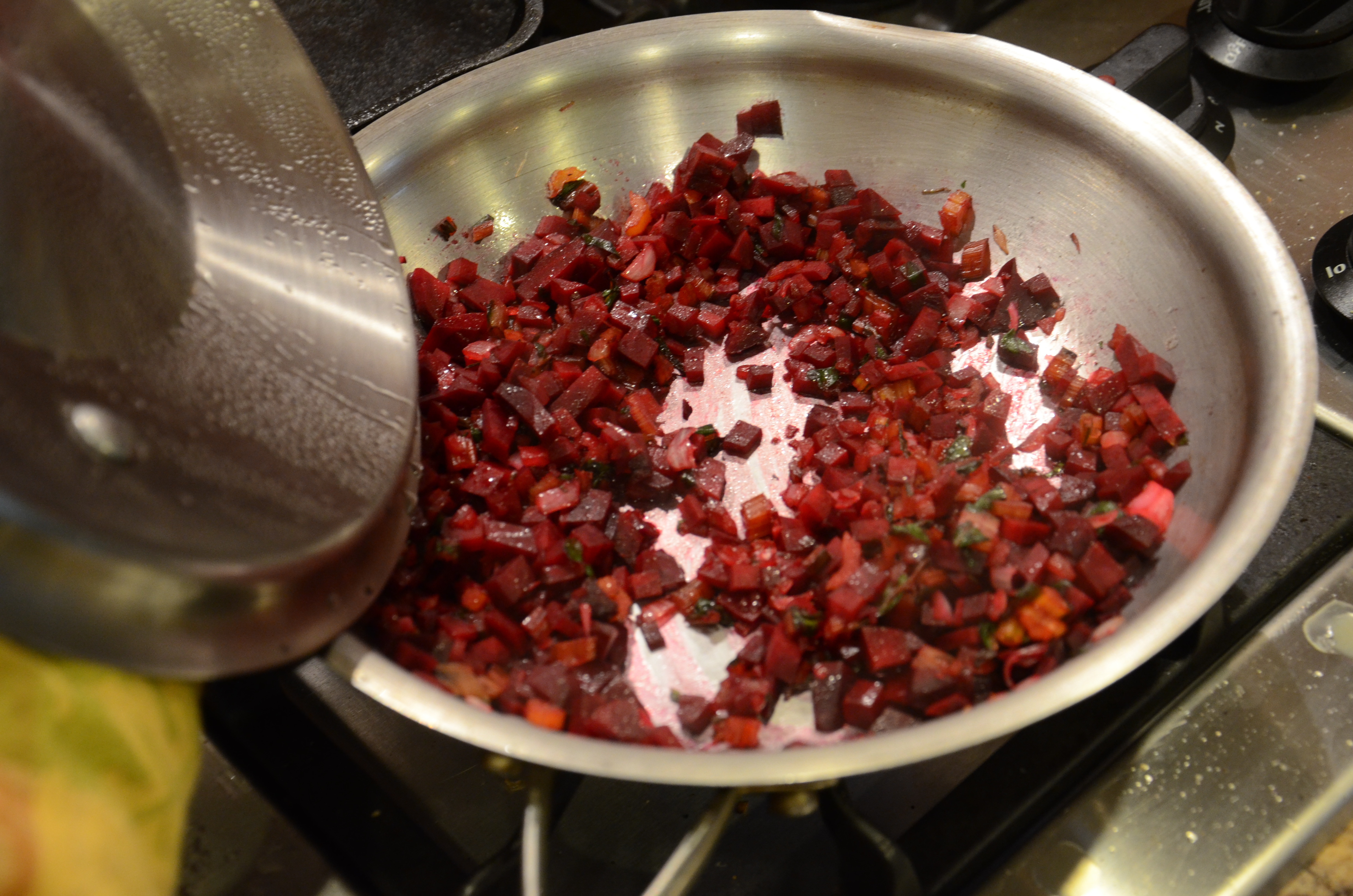
Stir in the beets. Cover the pot and cook until the beets are completely tender, stirring occasionally. Give it at least five minutes and then taste for tenderness.
DSC_4755
Add the garlic and cook until it is fragrant, about 30 seconds. Deglaze the pan using the cider vinegar.

Empty the black beans into a large bowl and use a fork to mash them up a bit. Add the cooked rice, the beet and onion mixture, the lemon juice, the olive oil, and all the spices. Stir to combine.
DSC_4756
Add salt and pepper to taste. Add the flour and stir. I needed to add a little extra flour for keeping the mix together, and it still fell apart a bit. Reviewers on the recipe’s webpage mentioned using rolled oats as a binder as well.

Heat a cast-iron skillet over the highest heat. Add a few tablespoons of olive oil, enough to coat the bottom of the pan. Heat until it flows easily and shimmers.

Using your hands, form about a cup of the burger mixture into a patty between your palms. (Get ready to have horror-flick gory hands). Set it in the hot pan. Continue shaping and adding as many patties are you are making at one time and add to pan as they fit. Reduce heat.

DSC_4759

What’s wrong with this picture? Answer: not enough oil in the pan.

Note: the recipe says that the burgers are best eaten immediately. The mix can be kept in the fridge for a few days if you want to save it and make additional burgers at another time. I formed a few burgers and stuck them in the freezer–I’ll let you know if they hold up.

Cook the patties for 2 minutes, working to get a nice crust, then flip to the other side. If you’re adding cheese, lay a slice over the burgers now. Cook the second side for another 2 minutes.

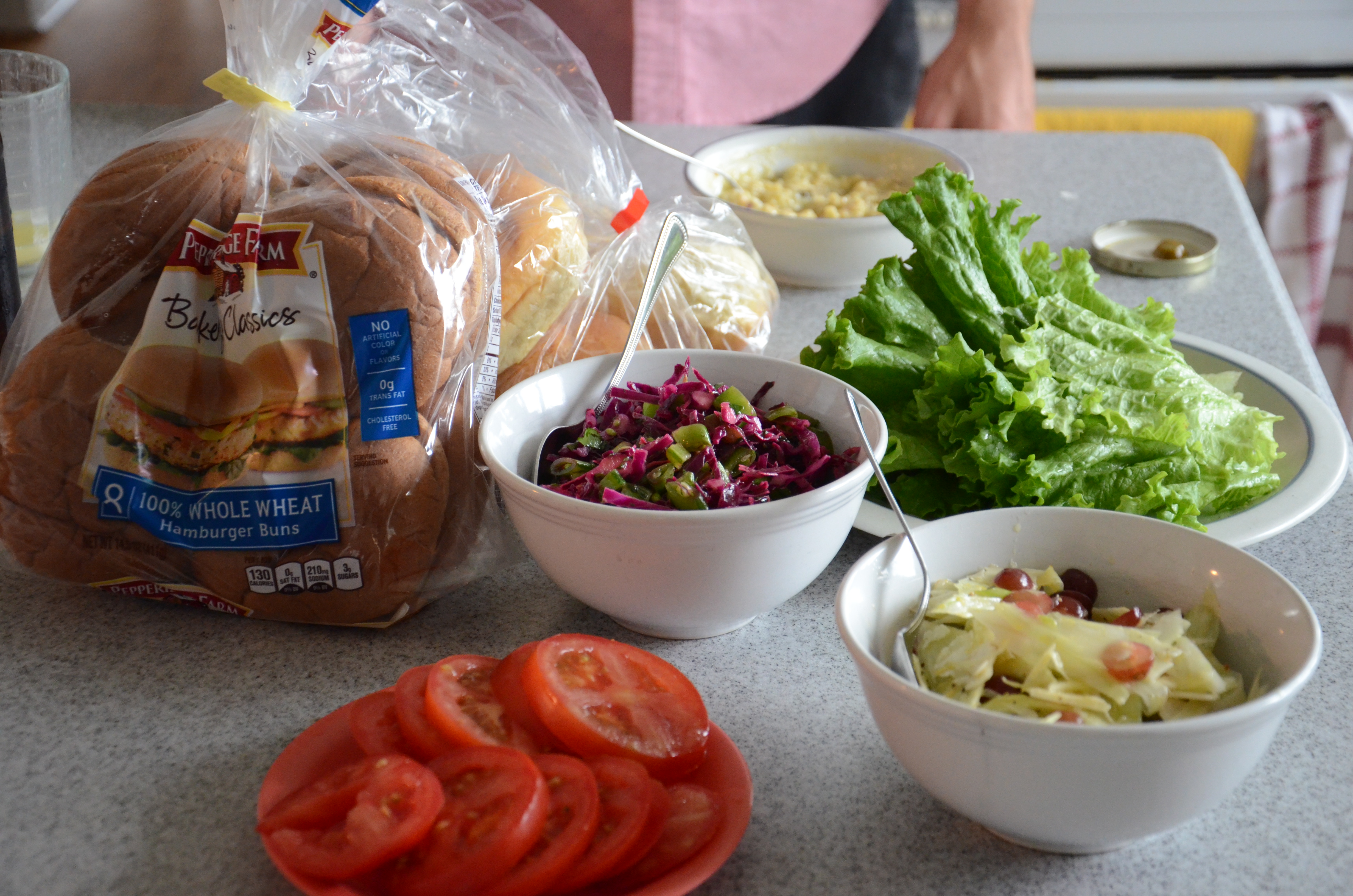
Serve the veggie burgers on a toasted english muffin, burger buns or sandwich bread.

Seriously, this was so delicious.

Seriously, this was so delicious.

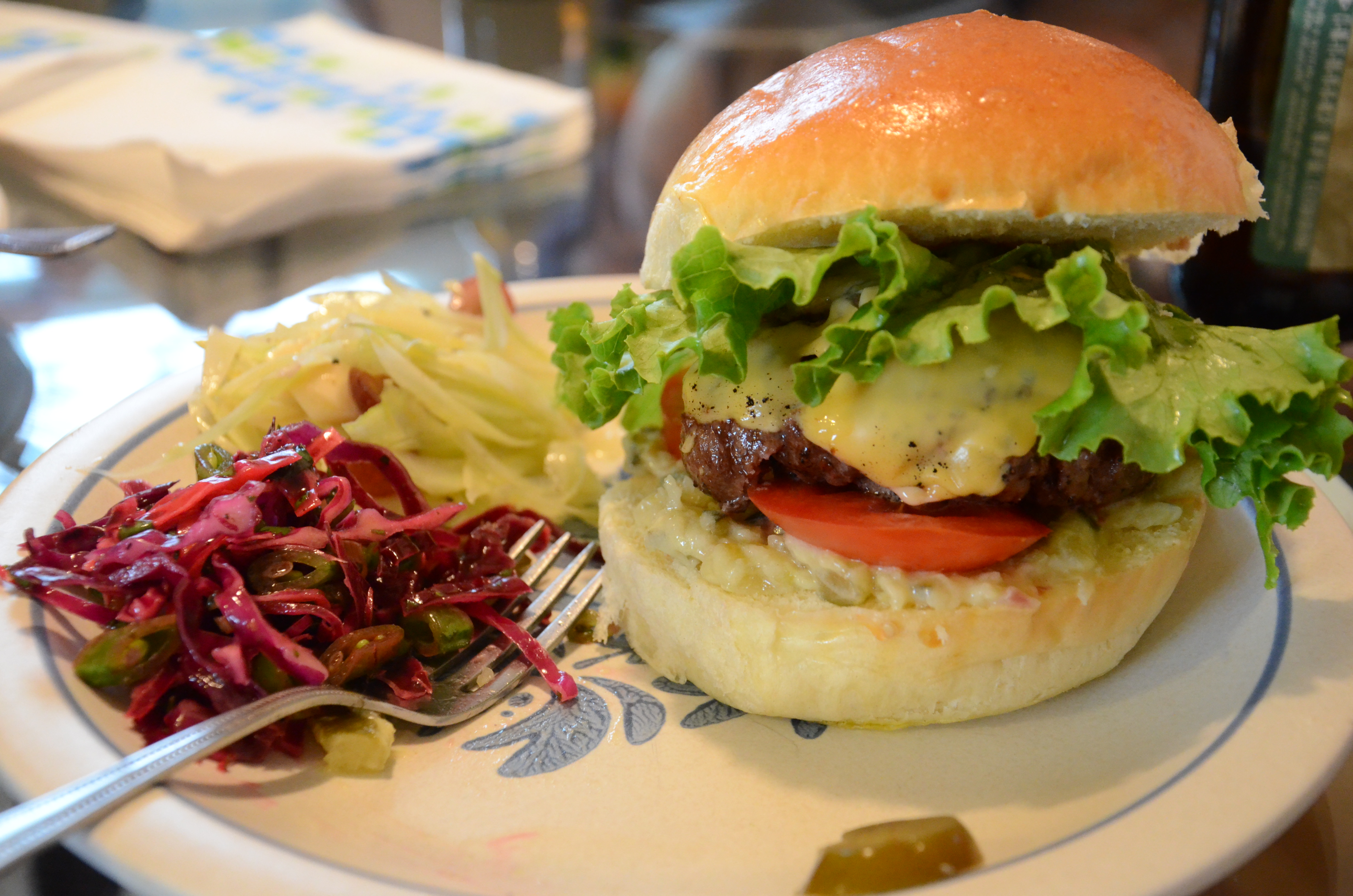
OK, OK, I know you want to see some meat. Here’s the burger I consumed at a friend’s house a few days later, made by our own Chef Chris Davila:

DSC_4769

The picture is blurry, but I’m sure you can see how it was cooked wonderfully medium rare.

He ground his own beef and used a combination of short ribs, sirloin, and flank steak. The recipe was from Saveur magazine’s June/July 2013 issue: Ultimate Grilled Cheeseburger. Special sauce and all.

DSC_4770And the spread:
DSC_4765

Happy burger season!

DSC_4767

A vegetable melee

DSC_4676

This week’s CSA share

I came across the book Dinner: A Love Story last year when it was on display at my library as a new release. I loved the book’s story of the woman’s life and relationship with her husband and children described in the context of the different meals they cooked and ate, going from entertaining friends to surviving picky kids. While reading it, Jenny Rosenstrach kind of became my idol–I wanted to be like her and for my husband to be like hers, meaning that we would email back and forth to decide what to cook for dinner every day and then rush to make a commuter train that would allow time for making it. But my Matt will never love cooking as much as her Andy, and I’m OK with that. I’ll take his moderate interest in cooking and general willingness to try new things (as long as they don’t involve raw fruits, other than tomatoes and avocados).

I guess I didn’t realize that she maintained a current blog until this week, when it came up in my search results for escarole recipes. In this post, she shared my sentiments exactly. I don’t need to say anything more. I made her recipe almost exactly–I pared it down somewhat for using 1/2 of the block of tofu, and it still used almost the entire package of wontons. As that was more than my friend Kristen and I needed in one sitting, I froze some of the uncooked dumplings, like she said.

Getting ready to execute two tofu-eriffic recipes.

Getting ready to execute two tofu-eriffic recipes.

Fried Vegetable Dumplings
Adapted from Dinner a Love Story

1 tablespoon vegetable oil, plus more for frying
Dash of sesame oil
3 scallions, chopped
3/4 teaspoon fresh ginger, peeled and minced
1 clove garlic, minced

1/8 tsp Chinese Five Spice
a shake of red pepper flakes
3/4 a large bunch fresh escarole greens, chopped (or any other greens you don’t like)
1/2 block extra firm tofu, pressed and drained on paper towels for about 15 minutes, and sliced into rectangles)
a few chives, supplemented by a few extra scallions, roughly chopped
a few tablespoons fresh cilantro, roughly chopped
2 tablespoons soy sauce
3 tsp seasoned rice wine vinegar
Squeeze of lime
1 12-ounce pack of wonton wrappers

Add the oils to a large frying pan over medium heat and cook the scallions, ginger, garlic, red pepper flakes, and Chinese Five Spice for about 2 minutes. Add greens and cook for a minute or two until all leaves are slightly wilted.

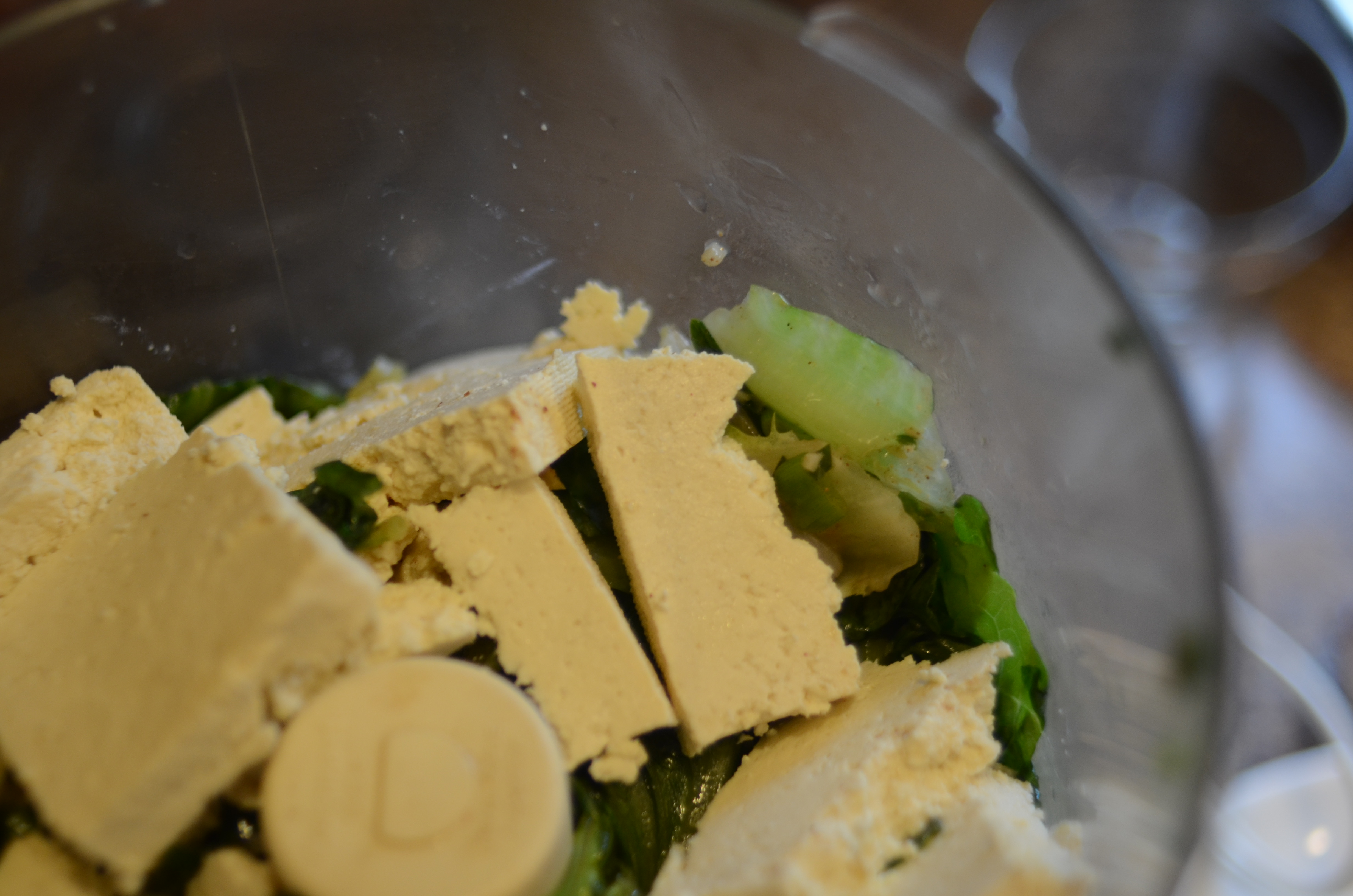
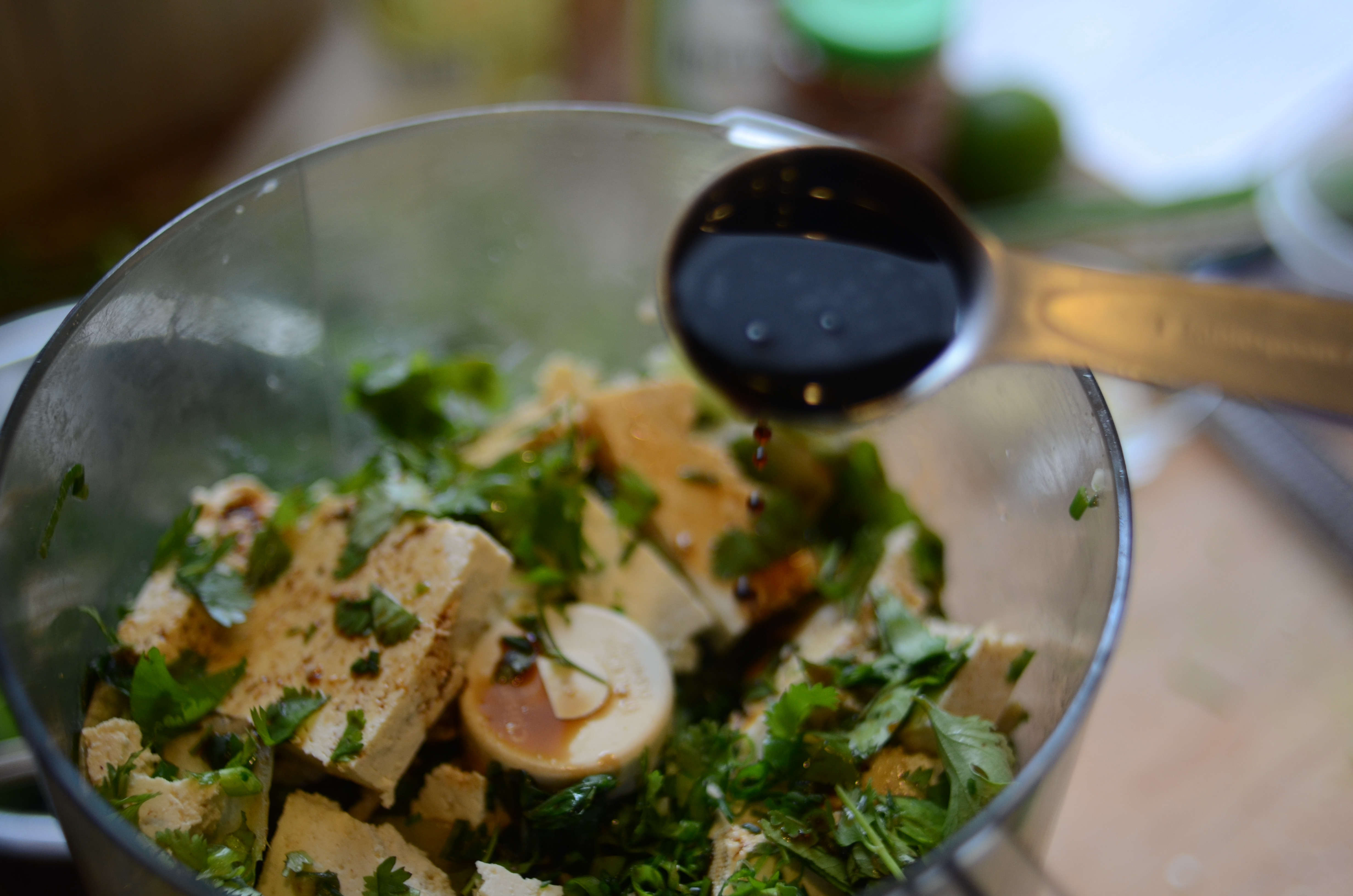
Transfer the filling to the bowl of a large food processor. Add remaining ingredients (except wrappers) and pulse until everything is roughly chopped.
DSC_4690
DSC_4699
DSC_4708

Get ready to wrap: Set up a small bowl of water, the filling, your wontons, and a platter of some kind for transferring over to the frying pan.

Dip your fingers in the water and drag around the edges of a wonton. Spoon a small amount of the filling into the center of each wonton.

Putting Kristen to work.

Putting Kristen to work.

Fold in half to make a triangle shape. Pinch all sides together; smush their centers slightly so they’ll lay flat in the frying pan–we forgot this step and it made for some rawer wonton edges.
DSC_4726

Once all the dumplings are assembled (or, once a few are and you are too hungry to wait any longer) add a tablespoon vegetable oil to a large skillet set over medium-high heat. Fry in batches adding more oil as needed, until dumplings are crispy and golden, about 2 minutes on each side.
DSC_4714
DSC_4716
DSC_4717

Chow down.

Chow down.

Serve with soy sauce.

I happen to pick out another recipe this week that had similar ingredients. I halved the recipe so I could get away with the one block of tofu total for both.

Three-Herb and Tofu Lettuce Wraps with Soy-Honey Dipping Sauce
Adapted from Tasting Table Test Kitchen Recipe
Serves 2

Wraps:
1/2 one 14-ounce block extra-firm tofu, drained
2 scallions, ends removed and white and green parts thinly sliced
1 teaspoon grapeseed or canola oil, divided if necessary
a couple of garlic cloves, to taste (we did 2) finely chopped
1-inch piece fresh ginger (about 1 tablespoon), peeled and grated or finely shopped (this is easiest to do from frozen)
1/2 jalapeño chile, seeds scraped according to your spice toleration, and finely chopped
1/2 teaspoon kosher salt
most of the juice from ½ lime

4 separated whole leaves from Boston, Bibb or Butter lettuce
1/4 cup fresh basil leaves (preferably Thai basil)
1/4 cup fresh cilantro leaves
1/4 cup fresh mint leaves
2 Tablespoons peanuts,
roughly chopped

Dipping Sauce:
3 teaspoons low-sodium soy sauce
Juice of 1/2 lime
2 teaspoons honey
1 teaspoons mirin rice wine
(Chinese cooking wine)
1/4 teaspoon chile-garlic sauce

DSC_4687

Slice tofu horizontally into a few rectangles so that it can drain thoroughly on 3 layers of paper towels (or a kitchen towel). Press with additional paper towels (or a kitchen towel).

Crumble the tofu into a colander and use more paper towels (or a kitchen towel) to press the tofu, extracting even more liquid, until the tofu is finely crumbled and feels fairly dry. Add the sliced scallions to the tofu and toss to combine.
DSC_4695

Prepare large nonstick skillet, set over medium-high heat with oil. For this recipe, all of the tofu will fit in one layer in a large nonstick skillet–if doing the full recipe or with a smaller skillet, cook the tofu-scallion mixture in batches.

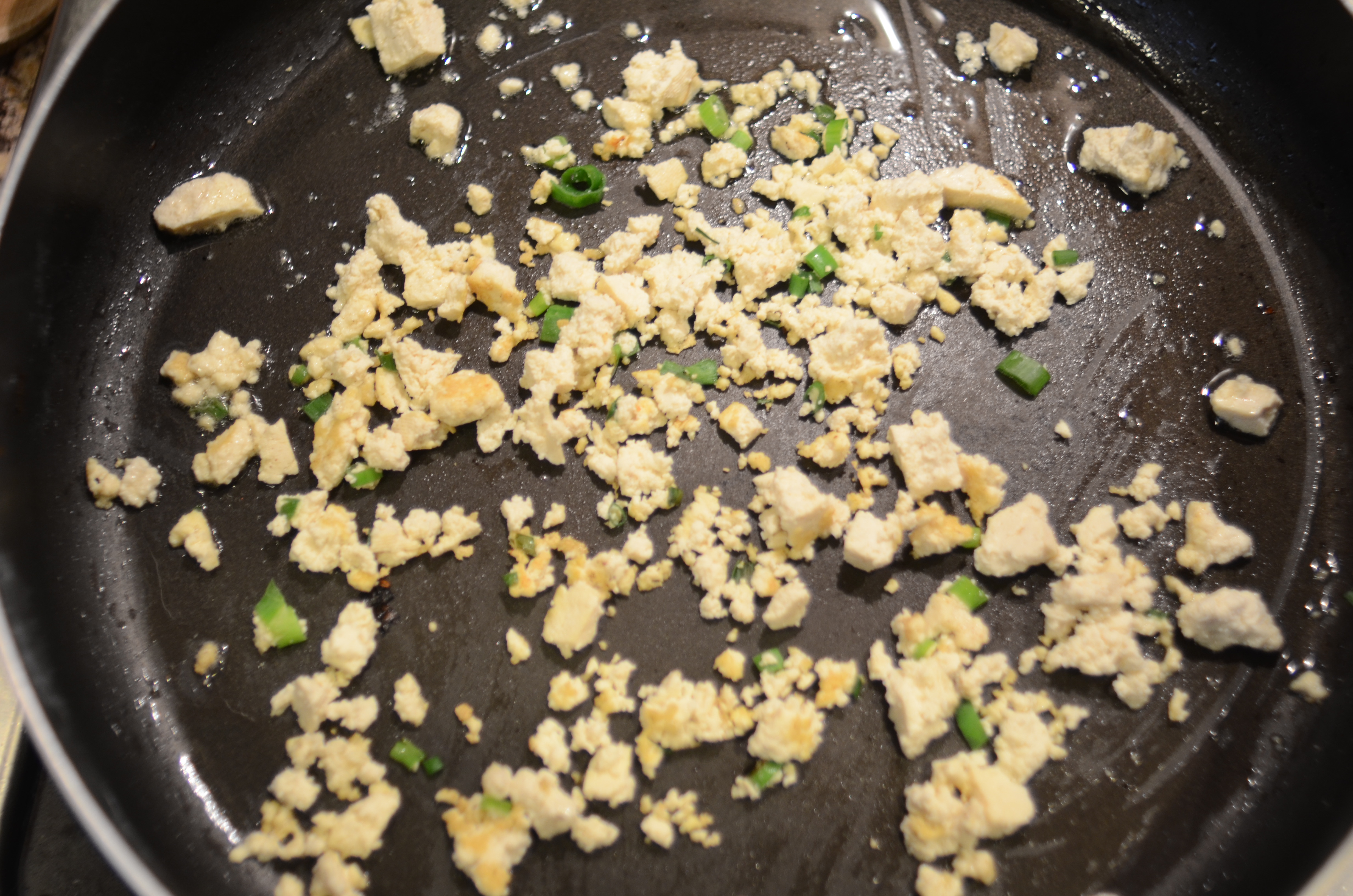
Cook without stirring until the tofu is browned, 3 to 4 minutes. Stir and continue to cook until the tofu browns a little more. The tofu and scallions take on a very unique crunch texture.
DSC_4731

With all of the cooked tofu in the skillet, make a well in the center add the garlic, ginger, jalapeño and salt.

DSC_4704

DSC_4703DSC_4727

Once the mixture starts to sizzle, after about 10 seconds, stir it into the surrounding tofu and cook until the tofu mixture is fragrant, stirring often, for about 1 minute. Transfer the mixture into a medium bowl, stir in the lime juice and set aside.

Make the dipping sauce: In a medium bowl, whisk together the soy sauce, lime juice, honey, mirin and chile-garlic sauce. Adjust to taste for more spice or more sweet.

Assemble the wraps: Set two lettuce leaves on each plate. Divide basil, cilantro and mint leaves among lettuce leaves, topping with sautéed tofu and peanuts, and drizzle sauce over the top.
DSC_4736
DSC_4738
DSC_4744

Messy and delicious.

My utensil holder runneth over

It is easy to accumulate a lot of stuff. In the mindset of “more is better” one discovers the truth that all the extras don’t necessarily add anything to life. Don’t get me wrong, I love The Container Store, but the irony isn’t lost on me that it is a store full of stuff to hold your stuff. Life would be simpler with less.  For example, sometimes I wish we could own just one set of bed sheets that gets washed and put right back on the bed so I don’t have to struggle to figure out how to fold a darn fitted sheet!  Also, they say that when you have a lot of clothing you seem to never wear, turn the hangers the opposite way until you wear them once, and if there are hangers still turned after a few months, donate those clothes.
This is what gave me the idea to assess the kitchen utensils we own in a similar way. Take a look at the number of spatulas we have.
DSC_4507
How many do we really need?

On Friday night, my husband and I hosted a pre-event cocktail party for his fire department company. Upwards of 30 people were expected. If there is any occasion you put a lot of kitchen equipment to work, it is for this type of cooking event.  Yet I don’t know that we actually used that many different things.  We did confirm a suspicion that what we could benefit from more serving platters.

Here are a few pictures of the food.

Beef and gorgonzola on crostini, served on a platter borrowed from my generous mother-in-law!

Beef and gorgonzola on crostini, served on a platter borrowed from my generous mother-in-law!

DSC_4671

Two types of phyllo triangles, courtesy of Smitten Kitchen again: Spinach and Feta and Mushroom and Blue Cheese.

Polenta cakes with tomato bruschetta.

Polenta cakes with tomato bruschetta.


Now, I have put a piece of blue tape on each utensil of questionable worthiness. As soon as I use one, the tape comes off. I marked the calendar for 4 months from now.  Items with blue tape remaining are in serious danger of eviction!

A perfect complement

As you can imagine, sometimes my quest for using up food makes for an unusual diet.

For example, I started last Sunday’s dinner with a kale and fruit smoothie, followed by grilled steak with chimichurri sauce, and topped off with bacon peanut butter cookies for dessert. Yep, you read that correctly.

Of course, I can explain:  Awhile back I had preserved leftover kale by freezing it in an ice cube tray, and I still hadn’t used it up. I added frozen berries, banana, nonfat greek yogurt, and honey for my appetizer drink. I made chimichurri again because I had made cubes of leftover parsley and cilantro leaves in olive oil also saved in the freezer.
As for the cookies….well, somehow my package of bacon wasn’t being used enough. And I had come across the recipe again from Joy the Baker. I was curious. How were they? All I can say is WOW.

Let’s talk about something that makes sense together: eggs and greens.

DSC_4576

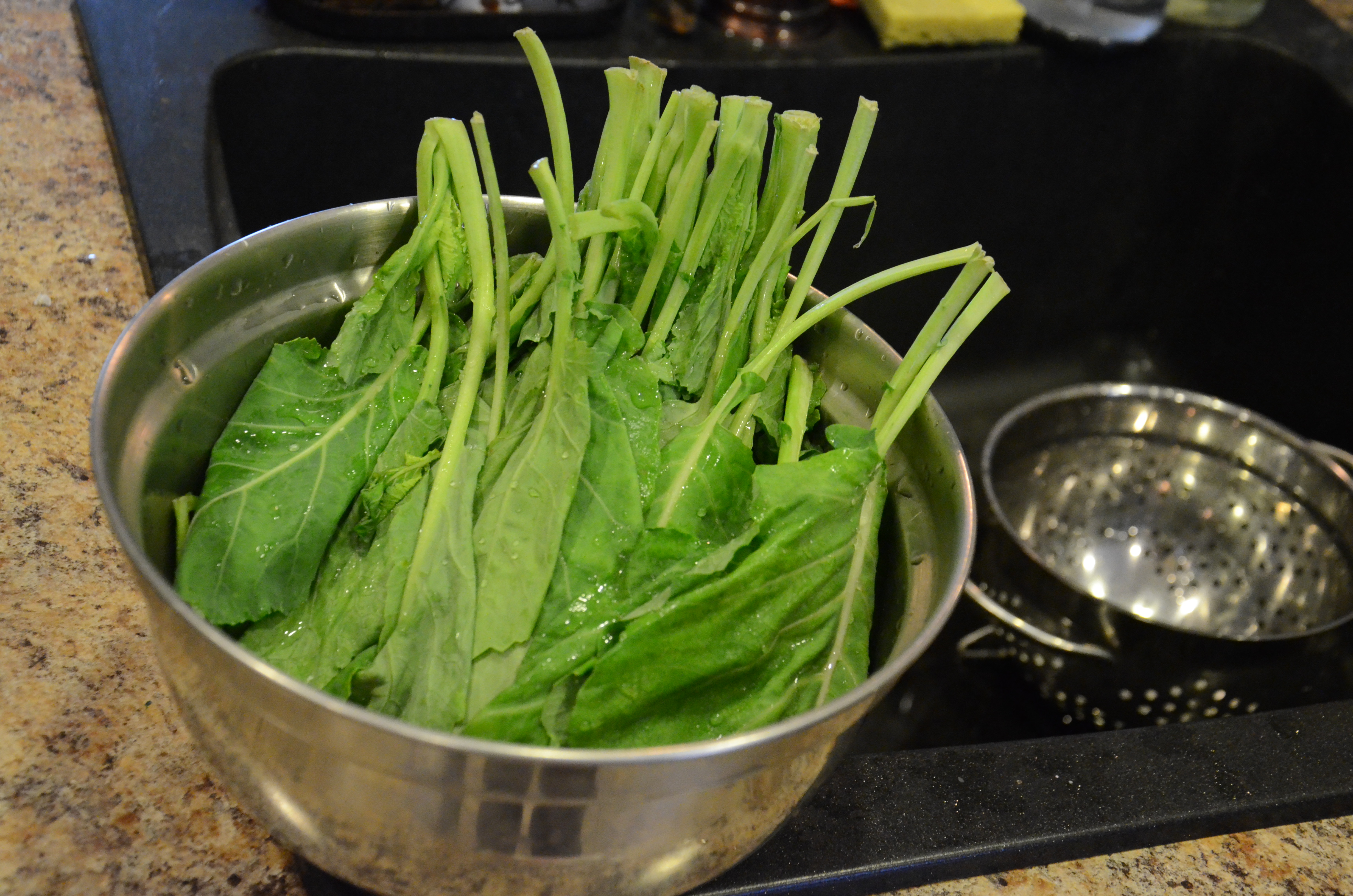
This is what fresh collard greens look like!

I’ll be experiencing an influx of greens in the coming weeks, so I’ll be sneaking them in wherever I can. This is a good thing, because it adds nutrition that I have probably been lacking lately.  Can we agree for a minute that bacon, in moderation, fits into a healthy lifestyle too? This is another easy and adaptable recipe.

DSC_4582

Baked Eggs with Southern-Style Greens and Polenta
adapted from a Whole Foods online recipe
Serves: 2

1/4 cup uncooked grits or polenta (coarse cornmeal)
3/4 cup water
1/8 teaspoon salt

1/2 tablespoon butter
2 slices bacon
1 bunch collard greens
, stemmed and roughly chopped
2 eggs

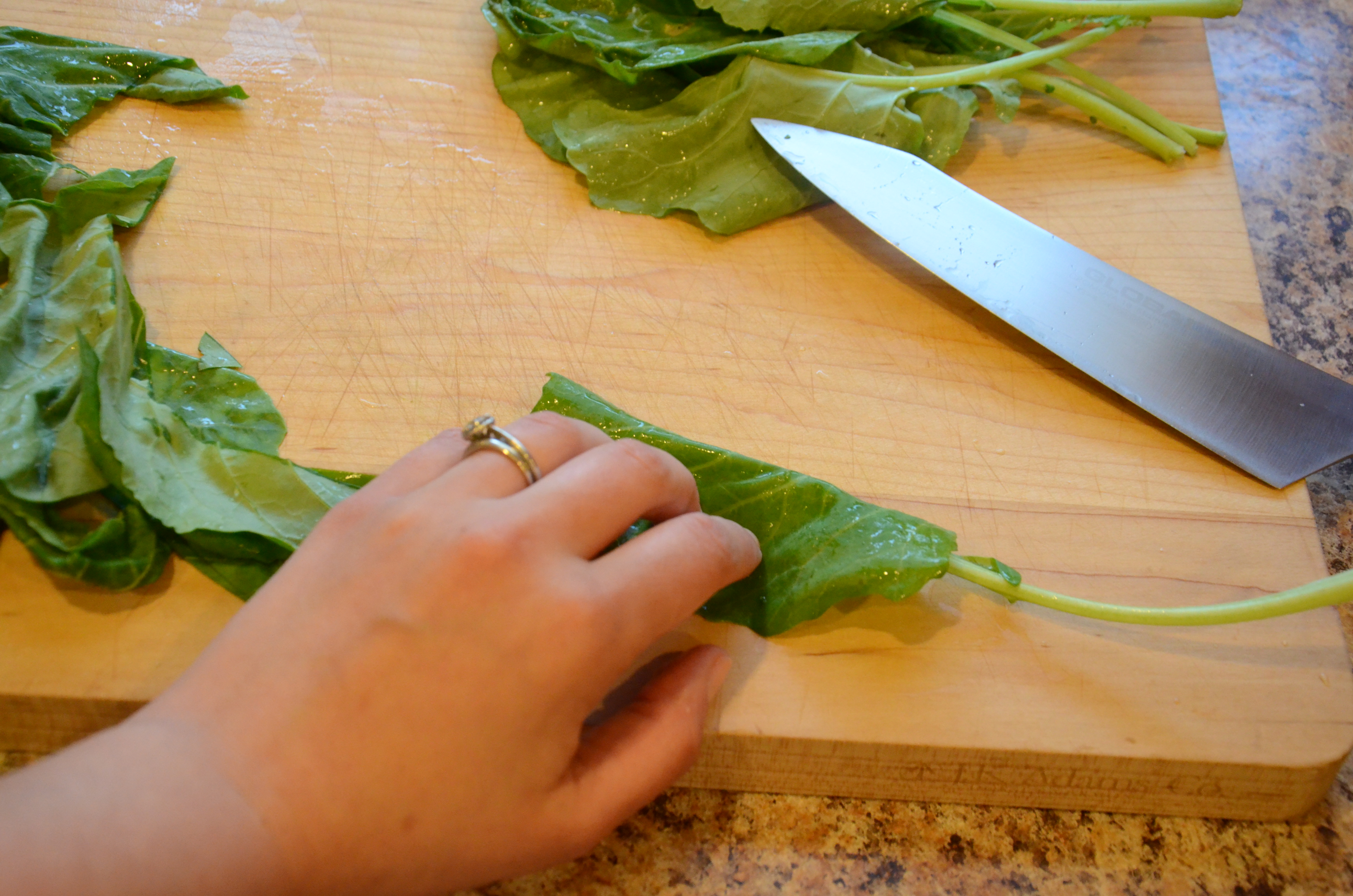
Stemming the greens is probably the most tedious part of this process. Here’s a quick hint to save time: fold the leaf in half over the stem so you only need to make one slice to remove it!
DSC_4586
DSC_4587
Preheat oven to 400°F. Arrange 2 large ramekins (at least 5 ounces) on a baking sheet, grease, and set aside.

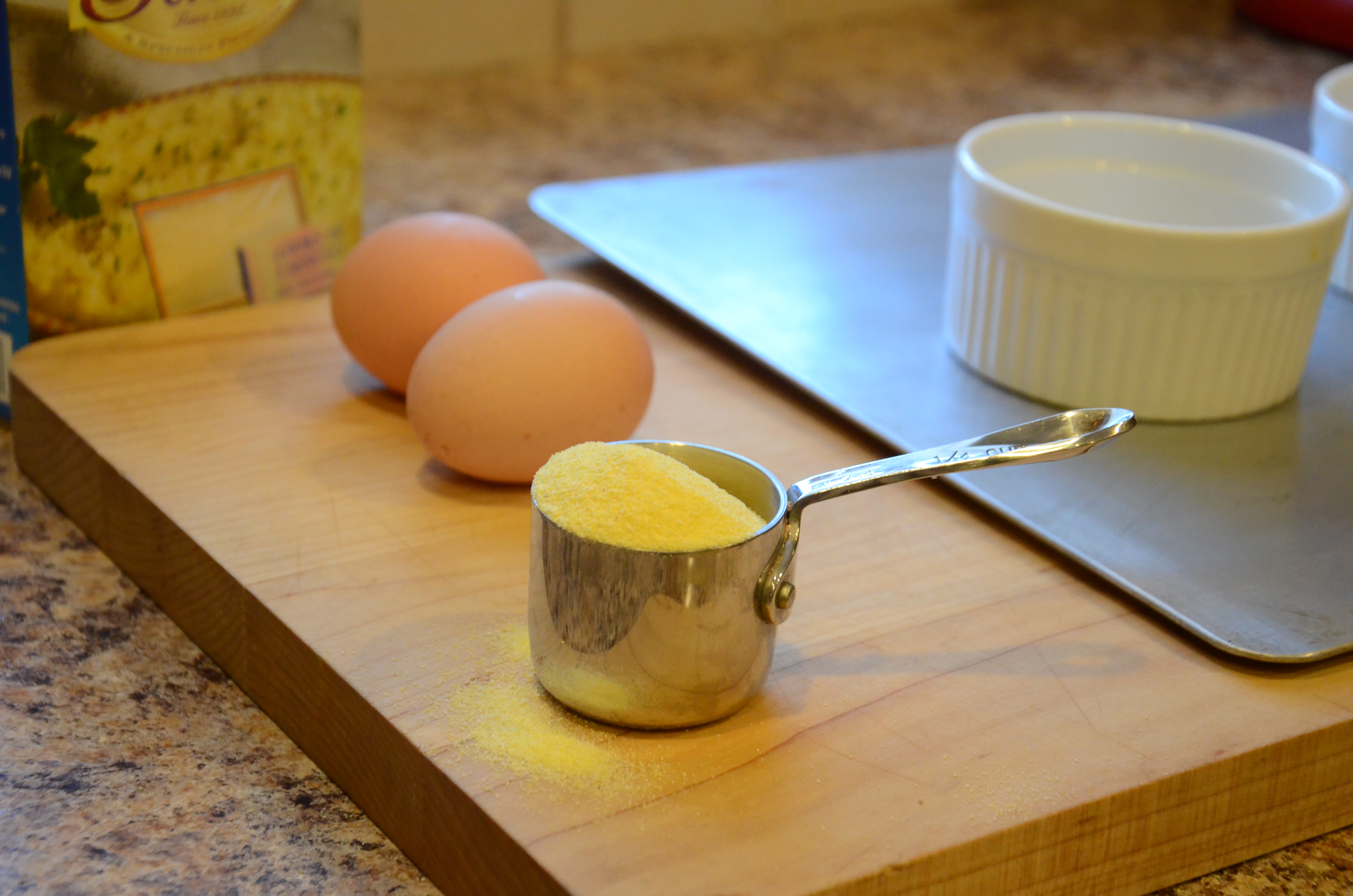
I used the remains of a package of instant polenta, which requires only five minutes of stirring. If using packaged polenta, follow the package directions. All methods start with boiling the water and salt, whisking in the grains, and reducing the heat to low. If using cornmeal or grits, you’ll be stirring often for 10-15 minutes until thick and creamy.
DSC_4585
Remove pan from stovetop. Stir in butter and season with salt and pepper. This is the step where I could definitely see something like shredded cheddar cheese added, if you’re into that sort of thing 🙂

Divide grits among prepared ramekins.

DSC_4584
Cook bacon in a large skillet over medium heat, turning occasionally, until just crisp, 6 to 8 minutes. Transfer to a paper towel-lined plate to drain and cool. Roughly chop.

Pour most of the bacon grease out of the pan, leaving about 1 tablespoon. Add greens to skillet and cook, tossing often, until wilted and just tender, about 5 minutes. Stir in bacon and season with salt and pepper. Arrange greens on top of grits in ramekins.
DSC_4589

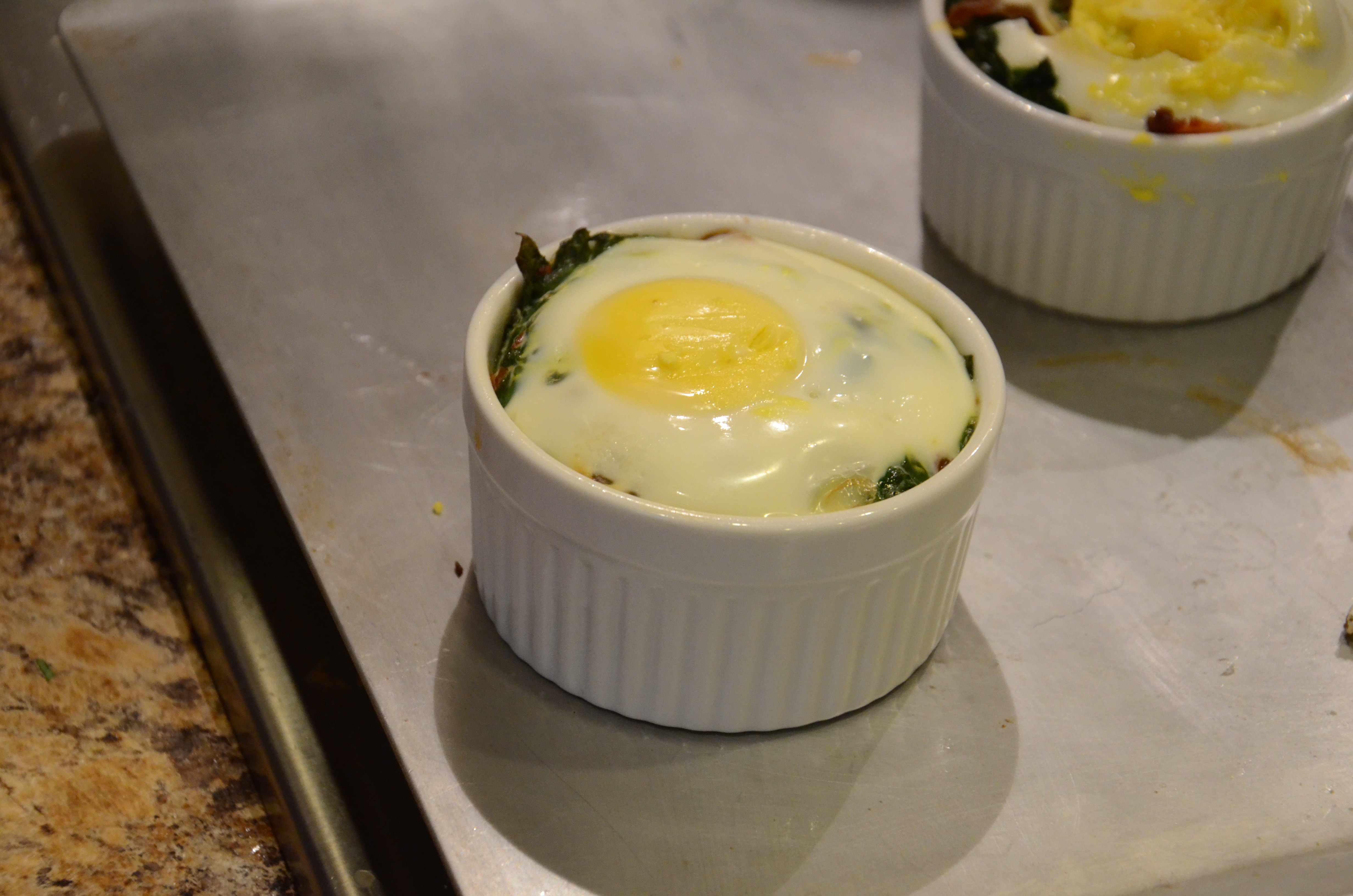
Crack an egg into the center of each ramekin and bake until whites are almost set, 15-20 minutes. Keep an eye on them or you’ll be sad like me and miss out on a runny yolk! Set aside to let cool briefly then serve.

Not quite how it was supposed to turn out, with a set egg. That is what happens when you run upstairs to change your clothes toward the end of the cook time!

Not quite how it was supposed to turn out, with a set egg. That is what happens when you run upstairs to change your clothes toward the end of the cook time!

Still enjoyable.

Still enjoyable.

And so it begins

This past week, I picked my first of 26 weekly shares of vegetables from Golden Earthworm Organic Farm.

I started this writing in this blog, in earnest, after my CSA farm share season had ended last year. But this regular supply of truly fresh, unique, and beautiful produce is a major source of inspiration for “Make Haste Not Waste.” Each week, I feel compelled to take advantage of every vegetable.

I knew that the beginning of the season meant that I would be faced with at least one thing I wasn’t excited about: radishes.

It’s not that I hate radishes — there are very few foods I truly hate — but they don’t do much for me. They are more likely to elicit “ehhhhhh” than “mmmmm.”

In advance, I started collecting every recipe I can across that used radishes in an interesting way: I have recipes for radish butter, chicken, arugula, and radish pizza, and sesame cucumber and radishes. My hunch was correct: radishes were included in this first share.

DSC_4568

The first time around, I went with a salad recipe that would utilize lettuce greens that were also included in the share and which have a shorter shelf life.

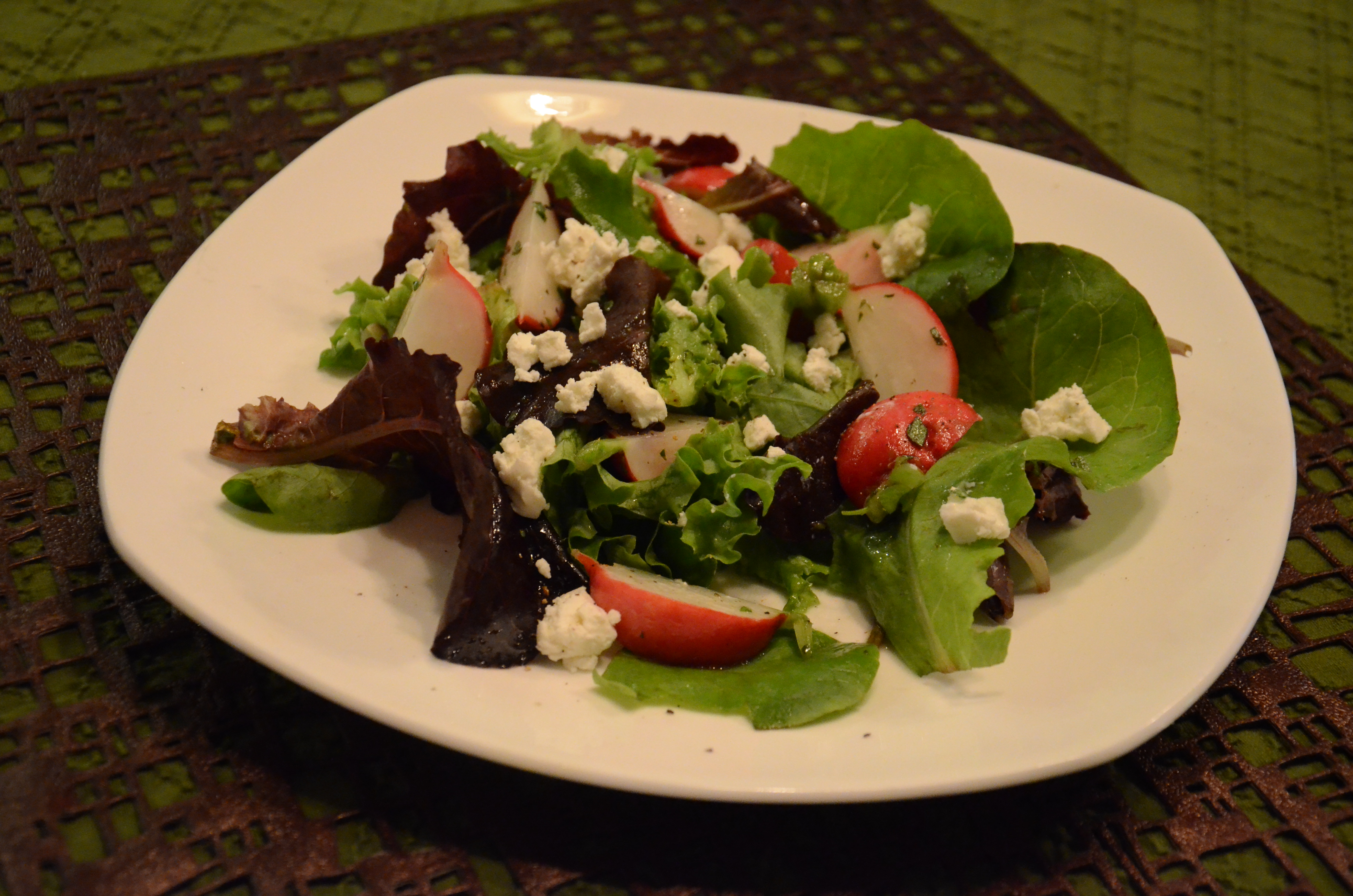
Radish Salad with Goat Cheese
adapted from Cooking Light, April 2013
2 servings

2 teaspoons white wine vinegar
1.5 teaspoons extra-virgin olive oil
3/4 – 1 teaspoon honey
– I like my salad dressing a little sweet, especially when dealing with the slightly spicy/bitter flavor of radish
1/8 teaspoon of salt
1 cup radishes, sliced lengthwise into 1/4-inch wedges, leaving on root and 1/2 inches of stem
1.5 teaspoons fresh oregano, chopped
2 cups mixed lettuce greens, or baby spinach
4 tablespoons goat cheese, crumbled
1/4 teaspoon black pepper, freshly ground, or to taste

Combine first 4 ingredients in a medium bowl, stirring well.
Add radishes and oregano; toss to coat.

Divide lettuce between 2 plates. Using a slotted spoon, top each plate with 1/2 cup radishes. Sprinkle each with 2 tablespoons cheese and 1/8 teaspoon pepper. Drizzle remaining dressing evenly over salads.

DSC_4573
You know what? I was fine with the radishes in this dish. The assertive flavors of oregano and vinegar stood out more. In fact, I think my reaction to eating this salad might have been closer to “mmmm” than “ehhh.”

Still, I’ll probably be keeping my eye out for a recipe that hides radishes in a cake 🙂

Decomposing

Today was a special day. A rare event. A momentous occasion.

Today I used compost in my garden for the first time.

I know what you’re thinking: I’m being overdramatic. I’m exaggerating. I don’t think so. This compost came from my backyard rotating composter, which is made up of kitchen scraps and plant debris that had been deposited over three years. Ever since I received the Envirocycle off my wedding registry from my sister Brenda, I had been transferring to the bin my egg shells, kale stems, potato peelings, onion skins, broccoli stalks (when I don’t use them for a soup), etc., through the spring rains and winter snows. I kept telling myself, one of these days I’m going to have to use some of this stuff. I honestly thought it might become urgent, because the bin would become too full to spin and mix. But that’s what is amazing about the biodegradation process: the mass kept shrinking down!
DSC_4538
The composter is one of those things I have to put very little effort into. The one stipulation, which I didn’t follow religiously, is that you are supposed to maintain a ratio of 50% “green” (the kitchen scraps) and 50% “brown” (dry leaves, grass, sawdust). Perhaps that is why my compost was so wet. Still, I am confident that composting has made a significant different in reducing the garbage output of my house. It is something I recommend to anyone–anyone, of course, with a house and a little yard space (though I suppose it is possible to store one on an apartment deck or patio. There are also places, like Greenmarket in NYC, that take your food scraps and compost them for you).

I decided that this spring, the second one at our house, would be the time to harvest at least some of the rich, fertile matter. So today I attempted to “sift” out some usable dirt. Here it is, eggshells and all!
DSC_4540

And here is my tomato garden as of May 27, 2013. Just you wait until the picture from August 27!

DSC_4542

Make it quick and make it quality

Last week I let someone else do the meal planning for me. I complained that the recipes were a bit of a hassle, and the dishes didn’t even come out that well. But the result was a balanced plate of food. This week, I challenged myself to plan a satisfying meal that would come together fairly quickly. And I would do the shopping myself.

As you should know this is not my strength: I often end up spending more than an hour, somehow, bringing together a single dish. Yet the April issue of Cooking Light was jam-packed with recipes for 80 meals under 40 minutes, and I was inspired (not so inspired that I could resist substituting in a recipe that I know would add to my clock time…but at least I acknowledge my silly ways). The meal was assembled in one hour, with only a little grilling help from my husband. So here it is! Protein (yes, fish again), vegetable and starch.

Grilled Sea Bass with Tarragon Beurre Blanc
Raw Shaved Asparagus With Lemon Dressing
Rosemary-Garlic Roasted Potatoes

DSC_4500

Game plan: Prepare the potatoes and garlic; preheat the oven. If you’re going to use this ambitious asparagus recipe (simpler alternative from CL: Asparagus with Lemon and Pecorino), start shaving the stalks and do about half before you put the potatoes in the oven. Finish shaving the asparagus, then preheat the grill/grill pan for the fish. Make the sauce while grilling the fish.
DSC_4489

Raw Shaved Asparagus With Lemon Dressing
Adapted from Jonathan Waxman’s recipe in his cookbook Italian, My Way
DSC_4533Check out my signed copy! ———->
Serves: 4 to 6

¼ cup hazelnuts, toasted and crushed
1-1 1/2 pound asparagus, ideally from a local farm
Juice of 1 lemon
¼ cup extra-virgin olive oil
Sea salt and freshly ground black pepper to taste
1 tablespoon Parmesan cheese, grated

Directions
Toast the hazelnuts on a baking sheet for 5–8 minutes in a preheated 350° oven; cool and then crush in a towel using a rolling pin (which helps remove the skins).

Wash and snap the asparagus spears at their base, setting bases aside for another use. Upend a small bowl, place a spear on the flat bottom and, using a vegetable peeler, gently shave long thin slices.
DSC_4490
Eventually, I discovered that it was easier to do my first shaves with the asparagus pressed flat against the cutting board. Once it got thinned, I moved to the bowl. Be patient and forgive yourself if you can’t get all long, perfectly thick slices.

In a separate bowl, mix the lemon juice with the olive oil and add sea salt and black pepper. When the rest of the meal is ready, toss the dressing with the hazelnuts and asparagus. Serve with Parmesan sprinkled around.

Rosemary-Garlic Roasted Potatoes
Adapted from Cooking Light
Serves: 2

several large garlic cloves
1 tablespoons extra-virgin olive oil

14 ounces baby potatoes
1-2 small thyme sprigs
2 rosemary sprigs
1/4 teaspoon kosher or ground sea salt, divided (or to taste)
1/8 teaspoon freshly ground black pepper (or to taste)
1 tablespoon fresh flat-leaf parsley, chopped, if you have it

Directions
Preheat oven to 450°. If the potatoes are larger than fingerling potatoes, cut in halves or quarters. Smaller potatoes can be kept whole, but medium sized ones benefit from more surface area for crisping!

Place unpeeled garlic cloves, olive oil, potatoes, thyme sprigs, and rosemary sprigs in a large bowl; toss to coat. Arrange potato mixture on a foil-lined cookie sheet. Sprinkle evenly with salt and pepper. Bake at 425-450° for 25 minutes, stirring halfway and then checking for doneness toward the end of cooking time. Squeeze roasted garlic cloves out of their skin and return to potato mixture. Sprinkle with 1/8 teaspoon kosher salt and parsley.
DSC_4498

Grilled Sea Bass with Tarragon Beurre Blanc
Adapted from Cooking Light again
Serves: 2

Sauce:
1/3 cup dry white wine

2 tablespoons shallots, chopped
1/4 teaspoon whole black peppercorns
1 large tarragon sprig
1.5 tablespoons butter
, cut into small pieces
1/2 teaspoon fresh tarragon, chopped

Fish:
2 (6-ounce) meaty white fish fillets, without skin — The recipe suggested halibut, but my grocery store didn’t have it. It also said cod or tilapia could be substituted (and would save money), but I couldn’t imagine how those would stand up so well to grilling, which I had my mind set on. The meatiest looking fish they had was the sea bass.
1/8 teaspoon kosher salt
1/8 teaspoon freshly ground black pepper
Cooking spray

Combine first 4 ingredients in a small heavy saucepan over medium-high heat; bring to a boil. Cook until liquid is reduced to 2 tablespoons. Remove from heat; strain through a fine sieve over a measuring cup, pressing mixture with the back of a spoon or spatula to release liquid.
DSC_4492
Discard solids. Return liquid to pan. Add butter, 1 piece at a time, stirring with a whisk until butter is incorporated. Stir in tarragon.

DSC_4495

Even at $19.95 a pound, I ended with a piece with a bunch of bones. Grrr.

Sprinkle fish evenly with salt and ground pepper. Heat a large grill pan over medium-high heat. Note: grill pans are great, but ours can be a beast to clean up. That’s why I like about the outdoor grill. It either doesn’t need cleaning…or maybe the grill fairy takes care of it?

Coat pan with cooking spray. Add fish to pan; cook 5 minutes on each side or until desired degree of doneness. Serve with sauce.

DSC_4502

There it is–the makings of a great meal!
DSC_4505